
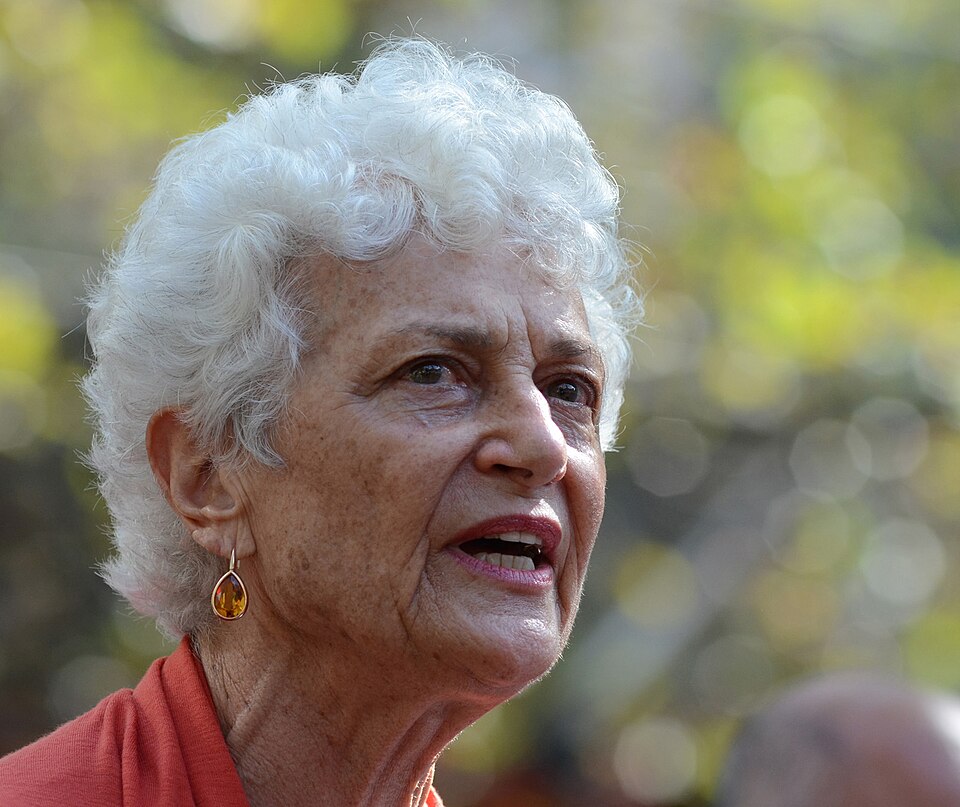
Prof Fiona Stanley: key facts
- Kind of voice
- Academic
- Role
- Founding Director and Patron
- Organisation
- The Kids Research Institute Australia
- Quoted on
- Hospital discharge / bed-blocking
- Tracked press citations
- 1
- Most recently quoted
- 27 Aug 2026
Who Prof Fiona Stanley is
Professor Fiona Stanley AC is an Australian paediatric epidemiologist who founded The Kids Research Institute Australia (formerly Telethon Kids Institute) in Perth in 1990, where she now holds the role of Founding Director and Patron. She holds a medical degree and an MD from the University of Western Australia, and an MSc in Social Medicine from the University of London, where she trained in epidemiology and public health. Her research, conducted with Professor Carol Bower, confirmed in 1989 the link between maternal folate deficiency and neural tube defects including spina bifida, contributing to prevention programmes that have reduced the incidence of these defects. She is also Distinguished Research Professor in the School of Paediatrics and Child Health at the University of Western Australia. She was named Australian of the Year in 2003 and has argued consistently that addressing the social and economic determinants of child health is essential to improving outcomes. NOTE FOR EDITORS: Prof Stanley's public profile and institutional base are Australian; no sourced evidence was found of a current UK-facing role or regular named presence in UK health or social care media.
“I felt sick in my stomach [when I was told] … I was even thinking at the time of saying, 'take the name away'. I mean, what do I stand for? I stand for humanity, particularly for children.”
References for this biography
- 1.Professor Fiona Stanley AC – The Kids Research Institute Australia — Current role as Founding Director and Patron of The Kids Research Institute Australia
- 2.Professor Fiona Stanley AC FAA FASSA – Penington Institute — Institutional affiliations, qualifications, Order of Australia award
- 3.Professor Fiona Stanley AC – Australian of the Year — Named Australian of the Year 2003; founding of Telethon Institute and folate/spina bifida research
- 4.Fiona Stanley AC – National Portrait Gallery Australia — Folate/spina bifida prevention programme; more than 300 papers; founding of institute
- 5.35 years of changing lives at The Kids Research Institute – Government House Western Australia — Scale of institute (nearly 1,200 staff), headquarters at Perth Children's Hospital, Stanley's founding role
- 6.Fiona Stanley – The Conversation — Current affiliation as Distinguished Professorial Fellow, The Kids Research Institute Australia
- 7.Fiona Stanley: recognising the complexity of childhood illnesses – The Lancet (2006) — Research on folic acid and spina bifida; advocacy for social and economic determinants of child health
Notable achievements
- Co-discovered in 1989 the link between maternal folate deficiency and neural tube defects such as spina bifida, contributing to prevention programmes that nearly halved the rate of spina bifida incidence in Western Australia within three years. Source ↗
- Founded The Kids Research Institute Australia in 1990, which has grown to nearly 1,200 staff, students and honoraries and is headquartered at Perth Children's Hospital. Source ↗
- Named Australian of the Year in 2003. Source ↗
- Awarded Companion of the Order of Australia (AC) in 1996 for services to research on the health of mothers and children and work in improving Aboriginal and community health. Source ↗
Where Prof Fiona Stanley has been quoted
- Fiona Stanley ‘ashamed’ after hospital bearing her name cancelled event featuring Palestinian Australian doctorstheguardian.com · 27 Aug 2026
Related media coverage
Recent UK press coverage of their topics — not necessarily citing them directly.
Contact & links
- Staff pagehttps://www.thekids.org.au/contact-us/our-people/s/fiona-stanley/
- Websitehttps://theconversation.com/profiles/fiona-stanley-16277
Organisational contact points only, each taken from a page the organisation publishes itself. No personal or direct contact details are held or shown.
Professors, researchers and think-tank analysts quoted on the strength of their research rather than a clinical role. Citations are counted by an automated scan of UK press coverage and may be incomplete. Roles, biographies and contact details are researched and human-reviewed before they appear here; anything not yet reviewed is simply absent rather than shown unverified. This profile was last updated on 5 Oct 2026. See the methodology for how this page is built, or email contact@bridgeheadcommunications.com to correct anything on it.