
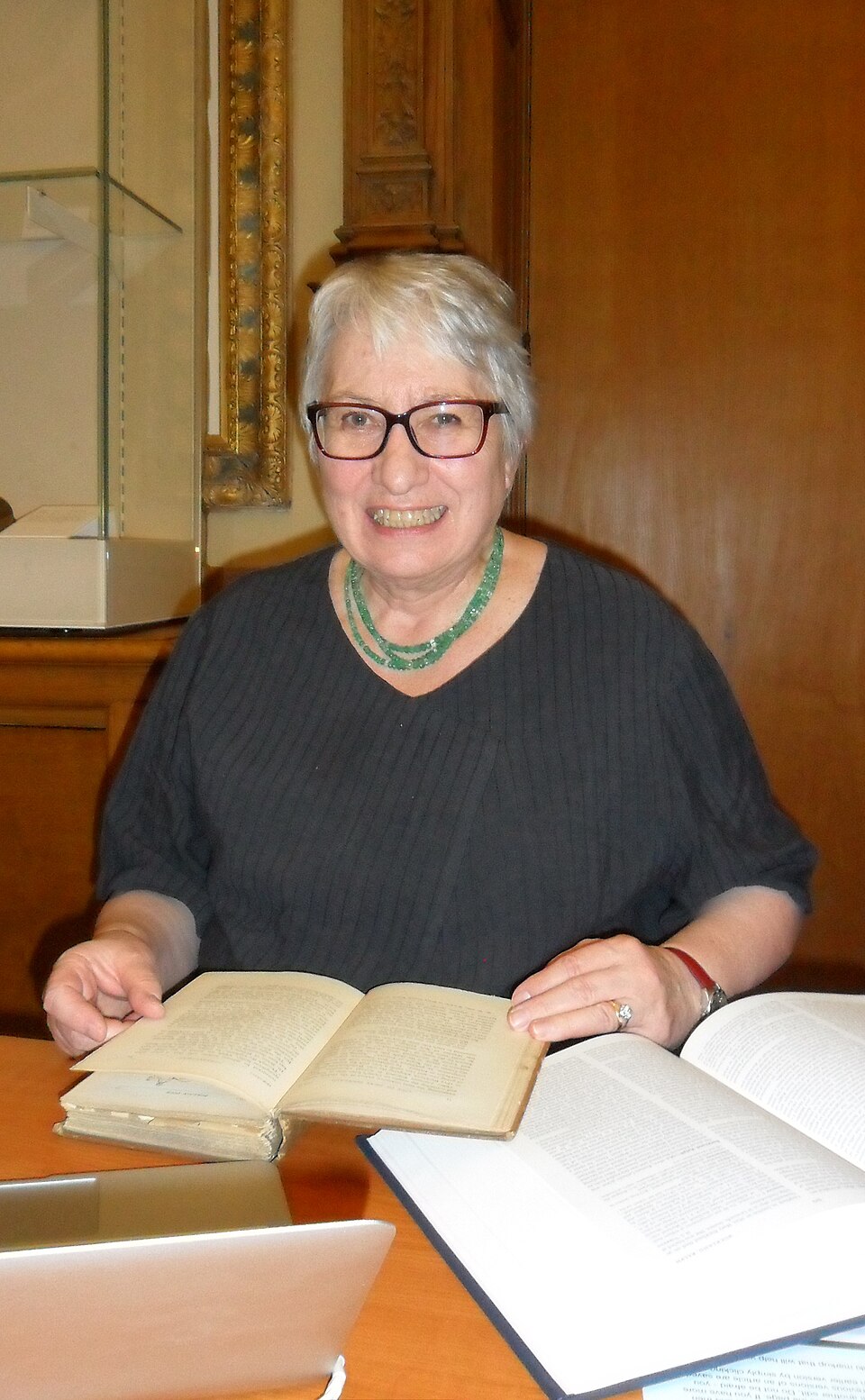
Professor Dame Uta Frith: key facts
- Kind of voice
- Academic
- Role
- Emeritus Professor of Cognitive Development
- Organisation based in
- Holborn and St Pancras
- Quoted on
- Learning disability & autism, Children's health
- Tracked press citations
- 12 (9 with a linkable article)
- Most recently quoted
- 4 Oct 2026
- First quoted
- 10 Aug 2026
Who Professor Dame Uta Frith is
Professor Dame Uta Frith DBE FRS FBA FMedSci is Emeritus Professor of Cognitive Development at the Institute of Cognitive Neuroscience, University College London. She trained in clinical psychology at the Institute of Psychiatry, University of London, completing her PhD on autism in 1968, and was an MRC-funded research scientist at UCL from 1968 until her retirement in 2006, serving as a founder member and deputy director of the ICN. Her research pioneered two of the principal cognitive theories of autism — implicit mentalising deficit and weak central coherence — and established the phonological basis of dyslexia. She was elected a Fellow of the Royal Society in 2005 and was awarded an honorary DBE in 2012, made substantive in 2019, for foundational contributions to clinical science and the understanding of autism and dyslexia. In August 2026 she published an editorial in Psychological Medicine arguing that the autism spectrum has become so broad it risks clinical confusion and misdiagnosis, sparking wide UK press and health-sector debate.
“Today, anyone of any age or intelligence level can be diagnosed with autism if they meet certain criteria.”
References for this biography
- 1.Professor Uta Frith DBE FBA FMedSci FRS | Royal Society Fellow — Fellowship, cognitive theories of autism (mentalising, weak central coherence), Royal Society Diversity Committee chair
- 2.Uta Frith | Newnham College Cambridge — Full name, post-nominal letters, emeritus role at UCL ICN, PhD training, MRC career, visiting professorship at Aarhus
- 3.Has autism become too broad to be useful? | UCL News — 2026 Psychological Medicine editorial on ASD over-broadening; DBE award 2012 reason cited
- 4.Autism spectrum disorder: has it lost its meaning and is it leading to misdiagnosis? | Psychological Medicine — Primary source for August 2026 Psychological Medicine editorial by Frith
- 5.Two UCL professors elected as Fellows of the Royal Society | UCL News — FRS election 2005 and career description
- 6.Short CV – Frithmind (Uta Frith personal site) — Full awards list including Jean Nicod Prize 2014, honorary DBE 2012, FRS 2005; ICN deputy director role
- 7.About us | UCL Institute of Cognitive Neuroscience — Organisation address: Alexandra House, 17 Queen Square, London WC1N 3AZ
- 8.Uta Frith – personal website — Confirms personal website URL and Twitter handle @utafrith
Notable achievements
- Elected Fellow of the Royal Society in 2005 for distinguished contributions to understanding autism, Asperger syndrome, and developmental disorders. Source ↗
- Awarded an honorary DBE in 2012 for pioneering, foundational contributions to clinical science and the understanding of autism and dyslexia. Source ↗
- Published editorial in Psychological Medicine (August 2026) arguing that the Autism Spectrum Disorder definition has become too broad and risks misdiagnosis, generating national press coverage and a formal response from the National Autistic Society. Source ↗
- Jointly received the 2014 Jean Nicod Prize (with Chris Frith) for work on social cognition. Source ↗
- Chaired the Royal Society Diversity Committee (2015–2018) and created materials to combat unconscious bias in selection processes. Source ↗
What Professor Dame Uta Frith has said
“This matters because diagnoses shape treatment, identity, and support. A wrong diagnosis can lead to the wrong help – or no help at all.”
Emeritus Professor at the Institute of Cognitive Neuroscience at University College London · Learning disability & autism · 4 Oct 2026 · Autism risks becoming a “catch-all” diagnosis for a huge variety of conditions ↗
“It is good to know that the independent review into mental health conditions, ADHD and autism is proceeding swiftly. However, the interim report does not raise hopes that we will know what to do about the mounting pressure on services.”
emeritus professor of cognitive development at University College London · Children's health · 10 Sept 2026 · Streeting-commissioned ADHD audit finds rising diagnoses do not match prevalence ↗
“It makes me hopeful that even more subgroups will come to light, and each will find an appropriate diagnostic label. It is time to realise that 'autism' has become a ragbag of different conditions.”
Emeritus professor of cognitive development at University College London · Learning disability & autism · 27 Aug 2026 · Autism should not be seen as single condition with one cause, say scientists ↗
“In my worst moments, I think it's a great number, but in my best moments, I think it is a small number.”
key figure in autism research since the 1960s · Learning disability & autism · 27 Aug 2026 · A split in the spectrum? The ongoing battle to define autism ↗
“Autism wasn't always defined this way – a sort of catch-all diagnosis for a huge variety of conditions. When it was first identified in the 1940s, it referred to a small group of children with severe difficulties in social interaction, communication and behaviour.”
UCL Professor · Learning disability & autism · 10 Aug 2026 · Leading expert says ‘anyone can have autism now’ as she claims spectrum is too broad ↗
“In the past, my colleagues and I felt confident that we could recognize autism at first impression in a thin-slice judgment. But this would not be true today in an era of record numbers of cases receiving an ASD diagnosis.”
Institute of Cognitive Neuroscience, UCL: University College London · Learning disability & autism · 10 Aug 2026 · Autism spectrum disorder: has it lost its meaning and is it leading to misdiagnosis? ↗
“The time has come to examine whether the autism spectrum has become too broad. Without greater precision, we risk misunderstanding people's needs and misdirecting care.”
UCL Professor · Learning disability & autism · 10 Aug 2026 · Autism spectrum has become 'too broad' and now includes people with 'milder traits', expert warns ↗
“anyone of any age or intelligence level can be diagnosed with autism if they meet certain criteria”
emeritus professor in cognitive development at University College London · Learning disability & autism · 10 Aug 2026 · Anyone can have autism now, says research pioneer ↗
Recent social activity
Where Professor Dame Uta Frith has been quoted
- Anyone can now be diagnosed with autism, says leading researcherfemalefirst.co.uk · 4 Oct 2026
- Autism risks becoming a “catch-all” diagnosis for a huge variety of conditionslearningdisabilitytoday.co.uk · 4 Oct 2026
- Streeting-commissioned ADHD audit finds rising diagnoses do not match prevalencepulsetoday.co.uk · 10 Sept 2026
- Autism should not be seen as single condition with one cause, say scientiststheguardian.com · 27 Aug 2026
- A split in the spectrum? The ongoing battle to define autismbbc.co.uk · 27 Aug 2026
- Leading expert says ‘anyone can have autism now’ as she claims spectrum is too broadindependent.co.uk · 10 Aug 2026
- Autism spectrum disorder: has it lost its meaning and is it leading to misdiagnosis?cambridge.org · 10 Aug 2026
- Autism spectrum has become 'too broad' and now includes people with 'milder traits', expert warnslbc.co.uk · 10 Aug 2026
- Anyone can have autism now, says research pioneertelegraph.co.uk · 10 Aug 2026
Related media coverage
Recent UK press coverage of their topics — not necessarily citing them directly.
Contact & links
- Websitehttps://sites.google.com/site/utafrith/
- Xhttps://twitter.com/utafrithpublished here ↗
- Staff pagehttps://www.ucl.ac.uk/icn/people
Organisational contact points only, each taken from a page the organisation publishes itself. No personal or direct contact details are held or shown.
Professors, researchers and think-tank analysts quoted on the strength of their research rather than a clinical role. Citations are counted by an automated scan of UK press coverage and may be incomplete. Roles, biographies and contact details are researched and human-reviewed before they appear here; anything not yet reviewed is simply absent rather than shown unverified. This profile was last updated on 5 Oct 2026. See the methodology for how this page is built, or email contact@bridgeheadcommunications.com to correct anything on it.