Vital Signsby BridgeheadAll voices

01  Voice · Academic · Dementia

Academic39articles

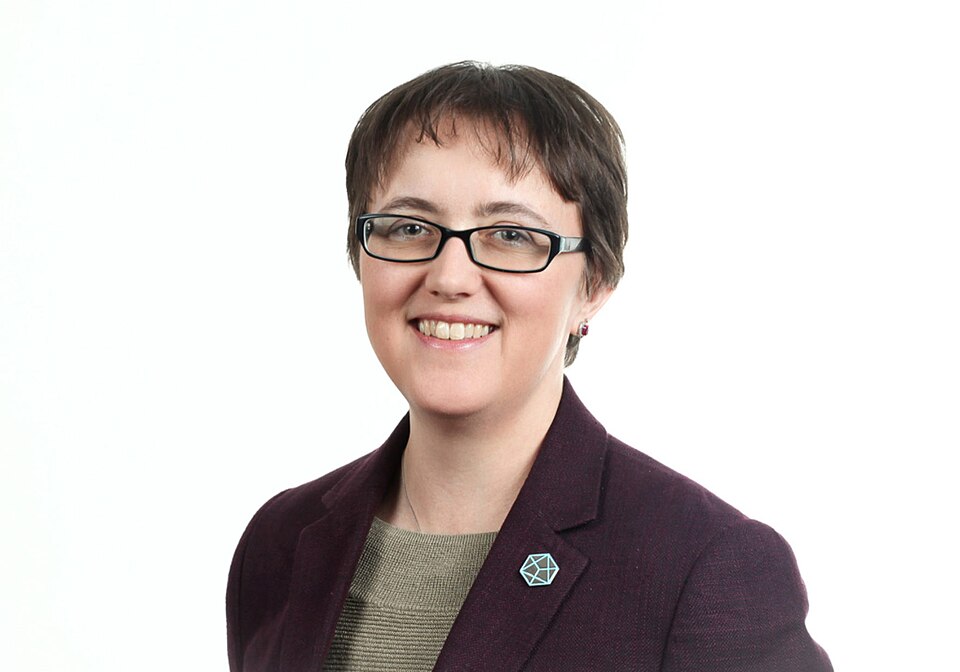
Tara Spires-Jones

Professor of Neurodegeneration and Director of the Centre for Discovery Brain Sciences, University of Edinburgh

Press coverage by month · bar height shows relative volume
Dec 2025Jan 2026FebMarAprMayJuneJulyAugSeptOctNovto date
Also cited

Quoted in the press on 1 topic since 17 Dec 2025

Named in 39 articles in the 12 months to 20 Nov 2026

Author of 303 academic papers, cited 28,064 times by other papers

Where their coverage sitsTop 20–50%

Top 5%, Top 5–20%, Top 20–50% and Lower 50% are groups, not ranks. They compare a person's media article count with the expert voices our media monitoring searched on both Factiva and the web: those our coverage scan cited most in each group on each topic when the lists were first published, up to ten per group (564 people), counting distinct UK media articles about each person in the 12 months to 20 November 2026, across every topic Vital Signs tracks. Top 5% means 83 articles or more; Top 5–20%, 41 or more; Top 20–50%, 19 or more. The groups hold about 5%, 15%, 30% and 50% of those people; voices tied on a count share the higher group. People added to the monitoring on 24 and 25 November were searched on the web only, so their figure is marked "at least"; they are placed against the same cut-offs, so their group is the lowest they could be in and may be higher. The lit step is Tara Spires-Jones’s group.

EDINBURGH
OfficeUniversity of Edinburgh, Edinburgh, EH8 9XDUniversity of Edinburgh is based in Edinburgh East and Musselburgh: the organisation’s base, not a personal address.

02  Quoted on · 1 of 29 topics

Open the topic

Tara Spires-Jones: key facts

Kind of voice
Academic
Role
Professor of Neurodegeneration and Director of the Centre for Discovery Brain Sciences
Organisation based in
Edinburgh East and Musselburgh
Quoted on
Dementia
Press coverage
Also cited
Most recently quoted
18 Nov 2026
First quoted
17 Dec 2025

Tara Spires-Jones: press coverage, 20 November 2025 to 20 November 2026

Articles
39
Distinct articles, each story counted once.
Factiva stories
29
Similar stories folded, press releases and listings left out.
Google and trade
10
Articles found through Google and the trade titles.
Duplicates removed
0
Web articles that match a Factiva story.

Counts are for the person, across every topic they appear on. Matching uses headline wording, so a reworded story can be counted twice, and a common name can pull in a namesake. Topic lists rank voices on this article count. The "where they sit" section places a voice on citations in our own collection. Counted from searches run on 20 to 25 November 2026, so a snapshot and a floor. How we counted.

Tara Spires-Jones: academic papers and citations

Papers on dementia221Their strongest topic by citations.
Cited by other papers22,340Times those papers on dementia are cited.
Topics with papers1Vital Signs topics where they have published.

From OpenAlex, an open index of the scholarly literature, matched to Tara Spires-Jones by ORCID or by name and institution, and computed on 22 November 2026. A paper counts for a topic when the topic’s search terms appear in its title or abstract, so one paper can count on two topics and the rows should not be added together. Citations favour people who have published for longer and in larger fields.

03  Profile

Who Tara Spires-Jones is

Tara Spires-Jones is Professor of Neurodegeneration at the University of Edinburgh, where she became Director of the Centre for Discovery Brain Sciences on 1 August 2024, and co-leads the Synapses, Circuits, Cognition and Physiology division in the UK Dementia Research Institute. Her research focuses on the mechanisms and reversibility of synapse degeneration in Alzheimer's disease and related neurodegenerative conditions, and she has pioneered high-resolution imaging techniques in human post-mortem brain.

She has published over 200 peer-reviewed papers cited more than 25,000 times, and is founding editor of the translational neuroscience journal Brain Communications. Prior to moving to Scotland in 2013, she was Instructor then Assistant Professor at Massachusetts General Hospital and Harvard Medical School; she completed her DPhil at the University of Oxford. She served as President of the British Neuroscience Association from 2023 to 2025, was elected a Fellow of the UK Academy of Medical Sciences in 2024, and was elected a Fellow of the Royal Society of Edinburgh in 2026.

Notable achievements

  1. 01

    Elected Fellow of the Royal Society of Edinburgh in 2026 in recognition of excellence in her field Source ↗

  2. 02

    Elected Fellow of the UK Academy of Medical Sciences in 2024 Source ↗

  3. 03

    Awarded the Alzheimer's Research UK 2026 Stuart Pickering Brown Prize for lifetime achievement in dementia research Source ↗

  4. 04

    Served as President of the British Neuroscience Association from 2023 to 2025 Source ↗

  5. 05

    Became Director of the Centre for Discovery Brain Sciences on 1 August 2024, taking over from David Wyllie Source ↗

  6. 06

    Awarded the 2024 Inge Grundke-Iqbal Award for Alzheimer's Research by the Alzheimer's Association for the most influential paper in the Alzheimer's field in the previous two years Source ↗

  7. 07

    Served as a member of the Scottish Science Advisory Council from 2016 to 2019 advising the Scottish Government on science policy Source ↗

Research & publications

Publication records from OpenAlex and Europe PMC, matched on name and affiliation. Every entry links to its DOI so the attribution can be checked.

04  The signal · where Tara Spires-Jones sits on dementia

Leading

One of the voices most often quoted in the press on dementia.

Placed by press coverage on this topic only, not across all topics.

  1. Lesley PotterClinicianAdmiral Nurse, Dementia UKLeading
  2. Dr Sheona Scales portraitDr Sheona ScalesSector leaderDirector of Research, Alzheimer's Research UKLeading
  3. Dr Richard Oakley portraitDr Richard OakleySector leaderAssociate Director of Research and Innovation, Alzheimer's SocietyLeading
  4. Paresh MalhotraAcademicProf, neurologist at Imperial College London and the trial's chief investigatorLeading
  5. Precious LungaAcademicEpidemiologist with a PhD in neuroscienceLeading
  6. Tara Spires-Jones portraitTara Spires-JonesAcademicProfessor of Neurodegeneration and Director of the Centre for Discovery Brain Sciences, University of EdinburghLeading
  7. Catherine SinnamonClinicianDr, lead author on the researchLeading
  8. Heather Barry portraitHeather BarryClinicianDr, principal investigator on the studyLeading

Showing the leading voices and those placed around Tara Spires-Jones · See every voice on the topic →

05  On the record · press

What Tara Spires-Jones has said

By outlet · bar length shows relative volume
  • femalefirst.co.uk
  • theguardian.com
  • independent.co.uk
  • bbc.co.uk
  • bbc.com

Where Tara Spires-Jones has been quoted

  1. Pill that mimics Viagra can slow Alzheimer’s progression, study suggests | Medical researchtheguardian.com · 18 Nov 2026
  2. Burnham backs pioneering clinical trial that could speed up Alzheimer's treatmentsindependent.co.uk · 21 Oct 2026
  3. Alzheimer’s treatment is advancing rapidly — and there’s one thing all of us can do to helpvox.com · 3 Sept 2026
  4. This actor was told he had Alzheimer's, now he's performing a one-man showbbc.co.uk · 31 Aug 2026
  5. Scots offered Alzheimer's blood test by GP in 'landmark' studyscotsman.com · 15 Jul 2026
  6. 'Landmark' study to see blood test for Alzheimer's offered by GPsitv.com · 14 Jul 2026
  7. New blood test for Alzheimer's disease to be rolled out as part of 'landmark' studyindependent.co.uk · 14 Jul 2026
  8. Blood test may predict dementia risk in womenfemalefirst.co.uk · 11 Mar 2026
  9. Drinking tea and coffee may slow cognitive declinefemalefirst.co.uk · 11 Feb 2026
  10. Drinking coffee may ward off dementiafemalefirst.co.uk · 10 Feb 2026
  11. Drinking tea and coffee may help preserve brain function and reduce risk of dementia, study suggestsnews.sky.com · 10 Feb 2026
  12. Scientists prove two hot drinks reduce dementia risk | Surrey Livegetsurrey.co.uk · 9 Feb 2026
  13. Exact number of tea or coffee cups a day linked to lower dementia risk revealed - Manchester Evening Newsmanchestereveningnews.co.uk · 9 Feb 2026
  14. What is the optimal tea and coffee consumption to reduce the risk of dementia?irishnews.com · 9 Feb 2026
  15. What is the optimal tea and coffee consumption to reduce the risk...dailymail.co.uk · 9 Feb 2026
  16. Alzheimer’s therapies should target a particular gene, researchers saytheguardian.com · 9 Jan 2026
  17. I'm watching brain surgery to see if Alzheimer's can ever be curedbbc.com · 26 Dec 2025
  18. Scientists shed new light on Alzheimer’s warning signsft.com · 17 Dec 2025
  19. Study finds 10% of over-70s in UK could have Alzheimer’s-like changes in braintheguardian.com · 17 Dec 2025

How we found the articles that name Tara Spires-Jones: we searched news for these terms.

  • dementia
  • dementia care
  • Alzheimer's
  • memory clinic
  • dementia diagnosis
  • dementia strategy

Also searched with “dementia” in each of 8 national papers, and in the Guardian by editor tag, and in trade press by category. Every term for Dementia

Verbatim

“This drug acts through boosting blood flow and likely also directly stimulating pathways in brain cells that promote learning and memory”
professor of neurodegeneration at the University of Edinburgh and a fellow at the Academy of Medical Sciences · Dementia · theguardian.com · 18 Nov 2026 · Read the article
“There is extremely promising neuroscience coming through the pipeline that can be tested in this trial and beyond.”
Professor of neurodegeneration, University of Edinburgh · Dementia · independent.co.uk · 21 Oct 2026 · Read the article
“The good news is, we have these two drugs that can help people. The bad news is, you don't get any better. You're still getting worse — you just get worse more slowly.”
professor of neurodegeneration at the University of Edinburgh · Dementia · vox.com · 3 Sept 2026 · Read the article
“Something stored in long-term consolidated memory is often easier to access than new memories that have just been formed”
Professor of neurodegeneration at the University of Edinburgh · Dementia · bbc.co.uk · 31 Aug 2026 · Read the article
“While not everyone with this pathology will go on to develop dementia, people with cognitive symptoms and a positive blood test are likely in the early stages of Alzheimer's disease, meaning this test will help with diagnosis.”
Professor of neurodegeneration at the University of Edinburgh · Dementia · scotsman.com · 15 Jul 2026 · Read the article
“Elevated levels of the protein pTau in blood indicate that people have Alzheimer's disease-associated pathology in their brains.”
Professor of neurodegeneration at the University of Edinburgh · Dementia · itv.com · 14 Jul 2026 · Read the article
“Elevated levels of the protein pTau in blood indicate that people have Alzheimer's disease-associated pathology in their brains.”
Professor of neurodegeneration at the University of Edinburgh · Dementia · independent.co.uk · 14 Jul 2026 · Read the article
“This is a well conducted observational study showing that race, older age and use of hormone replacement therapy can all affect how effective a blood test is at predicting cognitive decline and dementia in women.”
University of Edinburgh · Dementia · femalefirst.co.uk · 11 Mar 2026 · Read the article
“important limitations”
Professor, UK Dementia Research Institute · Dementia · femalefirst.co.uk · 11 Feb 2026 · Read the article
“This kind of observational research cannot prove conclusively that caffeine intake was the reason for lower dementia risk, other factors related to coffee and tea drinking habits could be responsible.”
Professor, Division Lead in the UK Dementia Research Institute · Dementia · femalefirst.co.uk · 10 Feb 2026 · Read the article
“other factors related to coffee and tea-drinking habits could be responsible”
Professor, UK Dementia Research Institute · Dementia · news.sky.com · 10 Feb 2026 · Read the article
“This kind of observational research cannot prove conclusively that caffeine intake was the reason for lower dementia risk, other factors related to coffee and tea-drinking habits could be responsible.”
Professor, division lead at the UK Dementia Research Institute · Dementia · getsurrey.co.uk · 9 Feb 2026 · Read the article
“This kind of observational research cannot prove conclusively that caffeine intake was the reason for lower dementia risk, other factors related to coffee and tea drinking habits could be responsible.”
Prof, Division Lead in the UK Dementia Research Institute, Past President of the British Neuroscience Association, and Professor of Neurodegeneration at the University of Edinburgh · Dementia · manchestereveningnews.co.uk · 9 Feb 2026 · Read the article
“This kind of observational research cannot prove conclusively that caffeine intake was the reason for lower dementia risk, other factors related to coffee and tea-drinking habits could be responsible.”
Professor, division lead at the UK Dementia Research Institute · Dementia · irishnews.com · 9 Feb 2026 · Read the article
“This is a well-conducted study that looked at data from a large number of people over many years.”
Professor, division lead at the UK Dementia Research Institute · Dementia · dailymail.co.uk · 9 Feb 2026 · Read the article
“Understanding the risk factors that made the brain vulnerable to Alzheimer's was 'essential for developing effective treatments and prevention strategies', adding that Apoe was one of the most important genetic risk factors.”
professor of neurodegeneration at the University of Edinburgh · Dementia · theguardian.com · 9 Jan 2026 · Read the article
“The human brain is so phenomenally complex that we really just have to see it in people”
director of the Centre for Discovery Brain Science at the University of Edinburgh · Dementia · bbc.com · 26 Dec 2025 · Read the article
“The study was 'interesting and important' but did suffer from limitations, including Norway's relatively homogenous and genetically undiversified population, which would not reveal variations in Alzheimer's prevalence known to exist in people of different ethnicities.”
Director of the Centre for Discovery Brain Sciences at the University of Edinburgh · Dementia · ft.com · 17 Dec 2025 · Read the article
“This data is very interesting, strong and accurate, and is an important extension to what we know. Treatment are currently not available on the NHS because they're so expensive and risky. But as these get better over the next few years it's important that we can find people with amyloid in their brain using an easy test.”
professor of neurodegeneration and director of the Centre for Discovery Brain Sciences at the University of Edinburgh · Dementia · theguardian.com · 17 Dec 2025 · Read the article

06  Sources

References for this biography

  1. Prof Tara Spires-Jones | Centre for Discovery Brain Sciences. Role, research focus, career history, BNA presidency, founding editor of Brain Communications
  2. Centre for Discovery Brain Sciences Welcomes New Director. Confirms appointment as Director of CDBS from 1 August 2024
  3. Prof Tara Spires-Jones | UK DRI. Current title (FMedSci, FRSE), publication count, awards including Inge Grundke-Iqbal 2024 and Stuart Pickering Brown Prize 2026, RSE fellowship 2026
  4. Tara Spires-Jones – University of Edinburgh Research Explorer. Academy of Medical Sciences fellowship 2024, BNA presidency 2023–2025, Scottish Science Advisory Council membership 2016–2019, career timeline
  5. Royal Society of Edinburgh Fellows 2026 | Edinburgh Neuroscience. Confirms election as Fellow of the Royal Society of Edinburgh in 2026
  6. Expert reaction to observational study of COVID-19 infection and abnormal brain proteins | Science Media Centre. Confirms press-quoted role as expert commentator on dementia-related health research
  7. Contact us | Centre for Discovery Brain Sciences. Organisational address (Hugh Robson Building, 15 George Square, Edinburgh EH8 9XD), press email and phone

07  Contact & links

Organisational contact points only, each taken from a page the organisation publishes itself. No personal or direct contact details are held or shown.

Professors, researchers and think-tank analysts quoted on the strength of their research rather than a clinical role. Citations are counted by an automated scan of UK press coverage and may be incomplete. Roles, biographies and contact details are researched and human-reviewed before they appear here; anything not yet reviewed is simply absent rather than shown unverified. This profile was last updated on 18 Nov 2026. See the methodology for how this page is built, or email contact@bridgeheadcommunications.com to correct anything on it.