
Edition · Education & Skills · The Mark
Norwich provider roundtable with Peter Aldous MP
Published by Bridgehead Communications in The Mark
Published 5 min read
A report from a Grade Communications roundtable in Norwich on Britain's post-Brexit, post-pandemic skills needs, keynoted by Peter Aldous MP, chair of the APPG on FE and lifelong learning. Ten local colleges, training providers and employer groups discussed labour shortages, levy funding and work placements.

Key findings
- One college said its electricity bill rose from £400,000 to £1.2 million, while a community interest company had budgeted for a 50 per cent rise in utility costs and found even that estimate already looking optimistic.
- One college principal called for a longer-term funding settlement instead of the one- or two-year deals colleges have traditionally received, and said the number of funding streams they must handle has tripled over 12 years.
- Peter Aldous MP, Chair of the APPG on FE and Lifelong Learning, said feedback from providers shows 'the levy is not working in top gear at the moment,' after attendees described employers hoarding unspent apprenticeship levy funds.
- One provider said young people could earn £11 an hour in hospitality, more than double the £4.81 apprentice minimum wage, an amount too low to draw them into training.
- One training provider said apprenticeship funding bands had not kept pace with inflation, forcing it to charge employers more, and reported that one employer pulled out of hiring apprentices as no longer 'commercially viable.'
In the News
This summer, students received their GCSE, A-level, T Level, and applied general qualification results after two years of studying through the Coronavirus pandemic.
Covid-19 pushed their learning and exams online, made securing work placements much more difficult, and funding to support their catch-up was much less than what many educators and experts expected.
Now they've left education - perhaps after delays to their BTEC results - and found further training opportunities have gone through the floor, despite widespread labour shortages and skills gaps.
Employers are also struggling to find skilled workers following the UK's departure from the European Union, according to Make UK's 2022 "2030 Skills: Closing the Gap" report. But their engagement in the growth and development of talent is patchy.
Some firms work with providers and are willing to share their levy funding. Others are less engaged meaning providers cannot benefit from industry knowledge and students cannot access work experience placements.
With those challenges arrayed against the FE and skills sector, ten providers met with Peter Aldous MP to discuss what can be done to England's education system and by employers to overcome these barriers to education and training.
Roundtable: Key Highlights
For this month's edition of The Mark, we've rounded up the key points from Bridgehead Education's college and training provider roundtable.
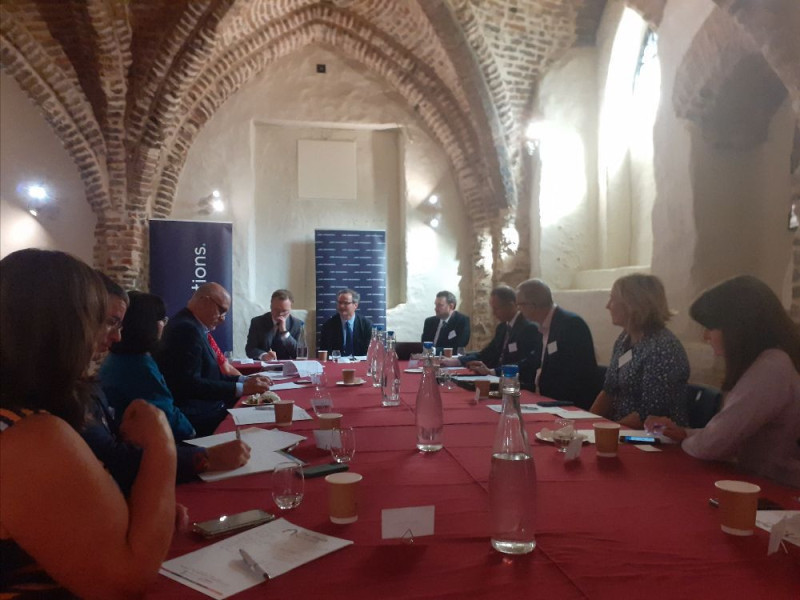
What did the roundtable reveal about pressure on the sector?
The sheer range of challenges facing colleges, training providers and education organisations was made clear early on at the roundtable event.
Peter Aldous kicked off the discussion with his statement that a downward trend in funding for FE and skills, combined with spiralling inflation and utility bills had meant the post-16 sector had “been required to do a great deal, but in effect with one arm behind its back”.
There was also an issue with politicians preferring to direct any additional funding towards capital projects – “shiny new buildings” – rather than targeting that money at improving provision directly. While new infrastructure is important, Aldous said, “it's investment in flesh and blood rather than investment in concrete and steel, which is probably most important”.
it's investment in flesh and blood rather than investment in concrete and steel, which is probably most important
Aldous called for more funding to be put towards the sector and for Universal Credit rules around claimants taking part in training to be relaxed so they could align their skills with what the economy needs.
Providers hit with rocketing utility bills
An issue which came up early in the discussion was the effect rising utility bills was having on providers: one college boss told of how their electricity bill had risen from £400,000 to £1.2 million. A community interest company leader said they had budgeted for a 50 per cent increase on their utility bills, but this was already looking optimistic.
The government has now announced a six-month package of support, the Energy Bill Relief Scheme, to control energy prices for colleges and training providers.
One college principal has called for a longer-term funding settlement for providers, rather than the one- or two-year settlements they have traditionally received. The principal also complained the number of funding streams they must deal with has tripled in the 12 years they have worked in FE.
Employers pulling out of 'unviable' apprenticeships
Another bugbear which providers brought up was around the controversial apprenticeship levy: one chief executive stated that companies had used levy funds to put existing staff onto apprenticeships, which has been a common complaint from providers and think tanks, including Reform, whose 2018 report found employers were using levy funds to rebadge existing training as apprenticeships.
Inflation again reared its head during discussions when one training provider boss highlighted how funding bands for apprenticeships were not keeping up with rising prices. Consequently, the provider was having to charge employers extra to cover costs and one firm had pulled out of hiring apprentices as they were no longer “commercially viable,” the attendee said.
The Apprenticeship Levy is not working in top gear at the moment
Why are companies sitting on unspent levy funds?
The skills lead at a local employers’ group said they had set up a levy transfer system to help larger companies share out unspent funds, some of which had gone towards helping new employees get into training.
However, certain levy-paying companies in the area have been hoarding their funds and were potentially sat on millions in public funding. This, the provider complained, was frustrating when that cash could be used to positively influence so many peoples’ lives.
Peter Aldous acknowledged the attendees’ complaints, noting how: “It's quite clear from the feedback I receive that the levy is not working in top gear at the moment.”
Young people choosing higher-paying hospitality jobs over training
Attendees also raised the lack of engagement from employers and young people in training, with one college principal recalling speaking with firms which wanted to know why the college was not preparing young people with the skills employers needed.
Yet the principal had asked those same firms if they offered work experience placements, how were young people going to grow within their organisation, and what was the structured training programme to move that young person through different levels of study.
In far too many cases, employers can't answer that question, the principal said.
Two attendees also complained that the apprentice minimum wage was too low to attract young people into training. The current wage of £4.81 an hour, then the statutory apprentice rate of the National Minimum Wage, was not worth coming off benefits, one of the attendees stated, while another told of how their young people could work in hospitality for £11 an hour – so they’re never going to give up those jobs for a third of the pay.
Peter Aldous, concluding the session, said he would take back to parliament how funding which had been directed by government towards FE and skills was being “rapidly eroded” by the cost of living crisis.