Interview · Health & Social Care · Cura Insight
Damian Green on the government's odds of finally fixing social care
In conversation with
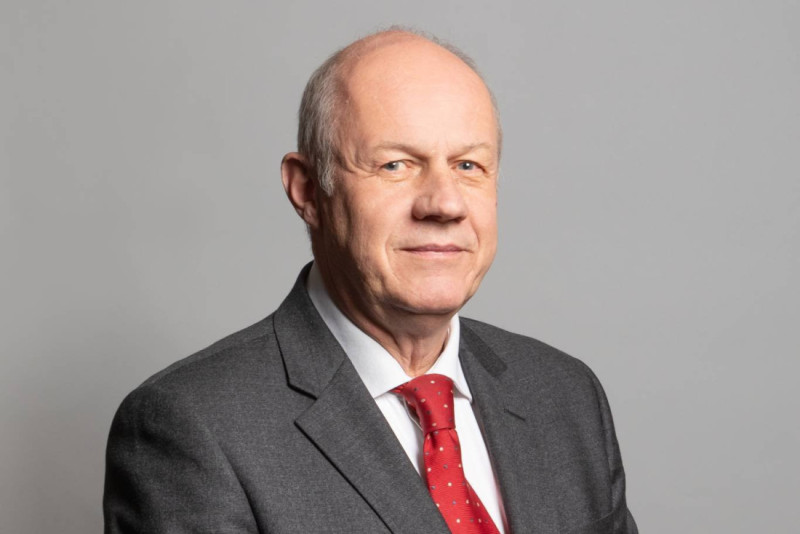
Damian Green, Chairman of the Social Care Foundation

Managing Director, Bridgehead Communications
Published 7 min read
Rt Hon Damian Green, Chairman of the Social Care Foundation and Senior Adviser to Bridgehead Communications, gives a candid assessment of the government's reform efforts, the Treasury's funding logic, and the single policy change that would matter most.
Key findings
- Green says the biggest reason for hope this time is that the Prime Minister is "personally and publicly committed" to a lasting solution, with a specific family reason for understanding social care "at the sharpest of sharp ends".
- Green argues the Treasury treats social care as "just another needy voice asking for more" in spending reviews, with the NHS normally cast as the "winner", though the Prime Minister, as First Lord of the Treasury, can override that if he chooses.
- Green recalls that a social care policy he introduced in government was rebranded the "dementia tax" within about seventy-two hours, and says the lesson is never to introduce a controversial policy in the middle of an election campaign.
- Green argues that "a package with no losers is usually a package with no reform", and says the fairest funding option would be asking pensioners who can afford it to pay something themselves, rather than taxing the working-age population through general taxation or National Insurance.
- Green says the single reform with the most disproportionate impact would be replacing local authority funding of care with national funding based on a national assessment of each individual's need.
Rt Hon Damian Green, former First Secretary of State, Chairman of the Social Care Foundation, and Senior Adviser to Bridgehead Communications, assesses whether the government can deliver long-overdue social care reform, in an exclusive interview for Care Home Professional by William Walter, Managing Director of Bridgehead Communications.
Green brings extensive experience to the social care debate. An MP for 27 years, he served as First Secretary of State, Deputy Prime Minister, Secretary of State for Work and Pensions, Policing Minister, and Immigration Minister. He also chaired the APPGs on Adult Social Care and Longevity, authored "Fixing the Care Crisis" (2019), and chaired a Public Policy Projects commission on social care. Today, he serves as Chairman of the Social Care Foundation think tank and Senior Adviser to Bridgehead Communications, advising care providers, CareTech businesses, and local authorities on policy and structural reform.
Every government for twenty-five years has said social care needs fixing, and none of them has fixed it. What is genuinely different about this attempt, and what is depressingly similar?
The biggest reason for hope this time is the Prime Minister is personally and publicly committed to a lasting solution. He has a specific family reason for knowing the needs of social care at the sharpest of sharp ends, and he knows he will have to spend political capital on a solution.
That last piece of jargon means in normal language that he knows any solution he reaches will make him more unpopular, because it is going to involve taking money out of millions of people's pockets. It will be genuinely courageous if he sees this through.
The depressing similarity is that the amount it will cost has already become the centre of the debate, and other political parties are seeing how they can gain a short-term political advantage from it. This is the route we have been down so many times before.
Nothing in social care happens until the Treasury signs the cheque. You have sat on the inside of a spending review. How does a social care bid actually get treated in that room, and what does a proposal have to look like to survive contact with the Treasury?
For the Treasury, social care is just another needy voice asking for more. In every spending review, the Treasury will recognise that there needs to be a "winner" (normally the NHS) and that everyone else will therefore have to suffer pain.
The ultimate horror for the Treasury institutionally is not an underfunded and inadequate public service, but the inability of the Government to borrow enough to keep the whole show on the road. This is not irrational, as when the British Government can only borrow at extortionate rates because of falling confidence (the Liz Truss disaster), all public services are at risk.
Combine this with the fixed view inside the Treasury that social care is not in crisis and you can see why, quite apart from the political difficulties of persuading people to pay more for social care, all previous Governments have baulked at enacting a proper solution. But the Prime Minister is the First Lord of the Treasury, so can impose his will if he chooses.
You were in government when a social care policy was rebranded, fairly or not, as the dementia tax inside about seventy-two hours. What did that episode teach you about the price of being honest with voters on this subject?
Don't introduce a new controversial policy in the middle of a General Election campaign, when careful explanations get drowned in the noise. Even a policy which was more generous to more people than the situation at the time could be blown up by a cheap soundbite. We are already quite late in this Parliament for a proper debate to take place in peacetime.
Louise Casey's Big Conversation is asking the right questions about the balance of rights and responsibilities, but it will struggle to capture public attention. A very small percentage of people regard social care as one of the key problems facing the country. It is a job facing the sector as much as the Government to convince a significant percentage of the public that this affects them, and that they should pay attention.
A package with no losers is usually a package with no reform
Social care reform is the perfect example of a policy where you pay the political cost now and your successor collects the credit. Why would a backbench MP with a marginal seat spend capital on it, and what has Burnham actually got to offer them in return?
This is a good question which sums up the political dilemma perfectly. The answer is that the vast majority of any MP's vote depends on his or her party label, however much politicians like to believe they have a personal vote. One of the big determinants of a party vote is how people regard the leader of the party and whether they think he/she is capable of delivering what they promise.
If Andy Burnham is seen to have failed on social care, given the prominence he has given the issue in his first few days as Prime Minister, he will be seen as an ineffectual busted flush in the manner of Keir Starmer. On that basis alone, Labour MPs ought to give him a fair wind on this, for reasons of self-preservation.
Having said that, I have been around politics for long enough to know that many nervous MPs with small majorities will not follow that logical path and will instead go for immediate headlines. It never works, but it seems to be an irresistible temptation in every party.
Baroness Casey has a formidable record and a very distinctive method. What does a commission-led process do well, and where does it risk producing something the sector does not recognise as its own?
The model for a good commission-led process was Adair Turner's review of pensions, which led to auto-enrolment and has been accepted by all Governments since. That too involved people making short-term sacrifices by saving more into their pensions, but it worked. So it is possible.
The sector needs to work hard over the next 12 months to influence the final Casey Report, to ensure that it is practical rather than ideological, and recognises the differences between the sector and the NHS while accepting the necessity for much greater co-ordination between the two.
The ideal result for some of the financial pressures which will make the final settlement difficult is for some money currently spent inside the NHS to be taken and given to the care sector, specifically to relieve pressures on hospitals. But even as I say that, I can see several pigs flying past my window.
Every reform package has losers, and a package with no losers is usually a package with no reform. Who are the losers in this one?
The short-term losers, however you fund reform, will be the general public, who pay for all public services. The key political choice is which part of the public will be most heavily affected.
If it is funded from general taxation or National Insurance, then the working-age population will be paying one more subsidy to pensioners. The most sensitive choice, but by far the fairest, would be to find a way for those pensioners who can afford it to pay something themselves.
Personally, I have argued in the past that an insurance system should be set up, backed by the Government so that people can save towards their care costs in a structured way which would preserve the bulk of their assets. The alternative is to find new ways to tax older people, and good luck with that.
But the real key is to convince the millions of people who will have at least one family member needing care at some stage of their lives that a better-funded and more stable system will provide a better quality of life for longer for their loved ones, and that therefore they should be as anxious about the future of the care system as they are about the NHS. That is a political persuasion campaign well worth running, and is indeed one of the purposes of the Social Care Foundation.
If, at the end of this, the Prime Minister doesn't achieve his ambitions, what one single reform would deliver disproportionate meaningful change to the sector?
The biggest short-term benefit would come from taking the funding away from local authorities, and replacing it with national funding based on a national assessment of need for each individual asking for care. This would be fairer, and could leave local authorities to shape the provision in their area.
The alternative is a slow death as local authorities are faced with demand for care growing faster than their budgets, and therefore commissioning at prices which are increasingly unrealistic. That is such a grim prospect that the wind behind the idea of national funding seems to be gathering strength, which is perhaps a hopeful straw in the wind for more widespread realism about full-scale reform.
This interview was originally published in Care Home Professional.