Insight · Health & Social Care
Consumer HealthTech and Patient Behaviour in 2026

By Alice West
Political and Media Consultant, Bridgehead Communications
Published 6 min read
How consumer health technology is reshaping UK patient behaviour in 2026, and what it means for healthtech communications and PR strategy.
Key findings
- A Cromwell Hospital study found 57% of UK respondents wear some form of health-tracking technology as of August 2026, and patients increasingly use that data to decide when, or whether, to seek care.
- Over 325,000 health apps are publicly available to UK consumers, and the NHS App alone had nearly 42 million unique account registrations by May 2026.
- In May 2026, NHS 111 online completed nearly 800,000 sessions, referring 37% of users to primary care and 11% to emergency treatment.
- According to Ofcom, 6% of UK adults lack home internet access, and around 30% of offline patients say the NHS is one of the most difficult organisations to interact with, a digital-exclusion risk communications strategies must account for.
Consumer health technology has moved beyond novelty tracking and now actively shapes how UK patients manage, report, and seek care.
But most HealthTech companies are still recycling the same marketing strategies that worked a decade ago.
In this article, we teach marketing and PR professionals how to work alongside HealthTech companies to design a better communications strategy. You'll learn how the digital health landscape has shifted, where most HealthTech communications go wrong, and what a successful approach actually looks like in 2026.
The wearable was just the beginning
The consumer HealthTech landscape has changed dramatically over the last decade.
First-generation wearables (think: basic step counters and heart-rate monitors) have become mostly obsolete in the face of technological innovation. Early healthtech had limited functionality besides recording data; wearables in 2026 go further and actively seek to influence consumer behaviour.
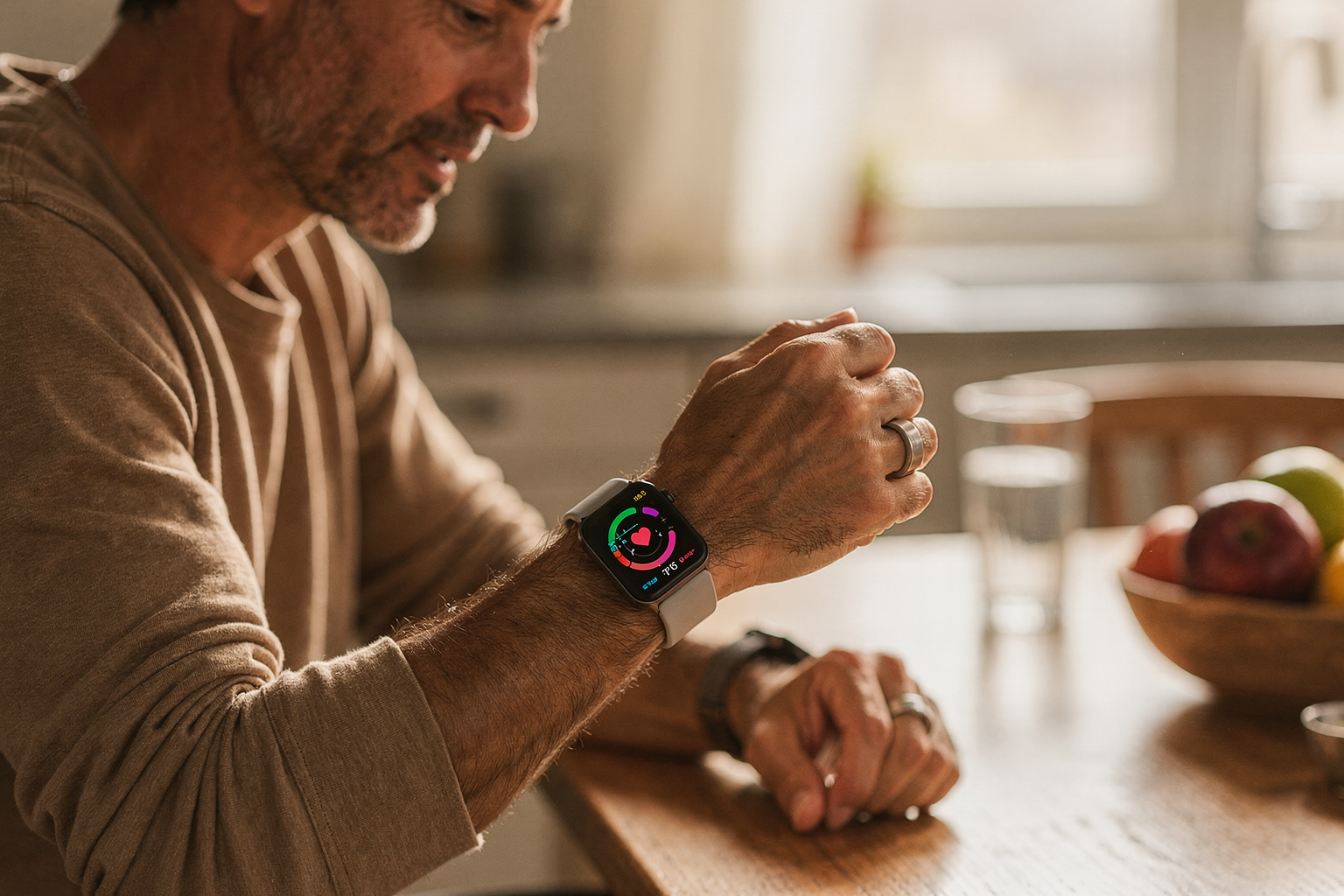
Today, growing adoption of products like continuous blood pressure monitors, ECG-capable smartwatches, and sleep monitors is changing how consumers think about and manage their health. A recent study by Cromwell Hospital found that 57% of UK respondents wear some form of health-tracking technology (August 2026).
This has clinical consequences. Patients frequently use health data to help decide when, or even if, they should seek care.
But it's not just limited to wearables.
Over 325,000 health apps are publicly available to UK consumers in 2026. The NHS app alone has nearly 42 million unique account registrations (May 2026). This is part of a wider shift towards digital integration in the health sector.
However, greater patient access to health data does not automatically mean better engagement with care. Meaningful behavioural change is built through consistent communication with HealthTech providers and clinicians. This is where health PR and marketing professionals prove their worth.
How are patients actually using the technology?
Most forms of patient engagement with HealthTech fall under three categories:
- Self-triage before a GP appointment. Consumers turn to digital resources like NHS 111 online, as well as various symptom-checker apps, to decide how, and if, they should seek clinical care. In May 2026 alone, NHS 111 online completed nearly 800,000 sessions, referring 37% to primary care and 11% to emergency treatment.
- Proactive condition management. This is a particularly prevalent use case among those with long-term conditions. For example, patients with Type 2 diabetes might use continuous glucose monitors to track blood-sugar spikes in real time.
- Health data sharing with clinicians. Patients are increasingly using wearable technologies to track health data between clinical consultations. This can offer clinicians valuable insight into a patient's condition over time; however, most health providers are currently ill-equipped to process and store large amounts of data, creating challenges for already time-crunched staff.
But the amount and quality of HealthTech engagement vary between UK consumers.
Older patients, or those with low digital literacy, often struggle to access digital health technologies. As more health systems move online, this directly impacts the quality of care they receive. Of offline patients, around 30% claim that the NHS is one of the most difficult organisations to interact with.
Low socioeconomic status is also a risk factor for digital exclusion. According to Ofcom, 6% of adults in the UK lack home internet access, a statistic that's partly attributable to rising broadband costs in 2026.
This matters for health PR and marketing teams. A communications strategy that ignores the realities of digital exclusion will attract unwelcome scrutiny from NHS commissioners and health journalists.
HealthTech marketing teams should also take note of regulatory boundaries.
Following post-Brexit regulatory changes, some digital health products now fall under MHRA jurisdiction.
Health apps that cross from wellness into medical device territory must comply with the relevant guidance: Software and artificial intelligence (AI) as a medical device (last updated in 2025). This shapes what claims brands can legally make in customer-facing communications.
What does the NHS think about consumer HealthTech?
Digital transformation is a core part of the NHS' ten-year plan (Chapter 3: From analogue to digital).
Proposals such as the Single Patient Record (SPR) aim to promote digital self-management and remote monitoring, allowing patients to upload their own data from clinically approved wearables. Doctors will be able to access this information securely, enabling proactive care at the first sign of deterioration.
However, the NHS currently falls short of these goals.
In practice, the quality of engagement with remote-monitoring data varies between integrated care boards.
For example, the NHS has admitted significant local variation in virtual ward delivery, which seeks to provide hospital-grade care and monitoring within patients' homes. The Virtual Wards Operation Framework seeks to minimise these discrepancies, but national ambition and local commissioning reality often diverge.
Virtual wards are a relevant case study for MedTech companies.
Now that some consumer-grade devices are being used in clinically supervised remote-monitoring programmes, the line between consumer and clinical marketing has blurred.
This matters for brand positioning.
Clinical buyers look for health technologies that meet NICE evidential standards. PR professionals working alongside HealthTech companies should be aware that unsubstantiated product claims not only damage credibility with commissioners, but also risk losing NICE accreditation.
Why communications strategy hasn't kept pace.
All too many HealthTech brands make the mistake of using outdated PR strategies to market their products. But approaches that worked in the first-generation wearables era no longer fit the current landscape.
So, what works in 2026, and what doesn't?
Most consumer HealthTech companies still lead with product features, emphasising specs like screen resolution, battery life, and sensor accuracy. This was an effective strategy in 2018, when the market was still being established, and better technical specifications could comfortably set a product apart.
Compare this to today's market, which is inundated with high-quality digital health products.
Consumers and commissioners are increasingly turning to evidence of behavioural change and clinical integration to inform buying decisions. Successful HealthTech brands in 2026 tailor corporate communications to their audience's shifting priorities. They tend to lead with outcomes data, patient stories, and clinical partnerships.
But consumers and commissioners aren't the only ones seeking hard evidence.
Health journalists and NHS-facing trade media, including HSJ, Nursing Times and Pulse, are applying a higher evidentiary standard to HealthTech companies than they did five years ago.
Greater scrutiny towards product claims means that spokespeople must be prepared to cite peer-reviewed evidence when challenged. Failing to do so damages credibility and can constitute a serious reputational risk.
You can help mitigate this risk through tailored media training for HealthTech spokespeople.
Marketing claims should be ASA-compliant.
In addition to spokesperson media training, you should take steps to manage reputational risk by ensuring all marketing content complies with ASA advertising guidelines for medical devices.
Advertising standards also apply to social media. Recent digital health content concerning wearable CGMs among non-diabetic users has outrun regulatory and evidential frameworks; HealthTech brands need to adopt a proactive position on this, not a reactive one.
What good looks like from here.
We've explored the changing HealthTech wearables market and pinpointed the common mistakes that companies make when marketing products, but what does a good communications strategy actually look like in 2026?
Here's how you implement the core features of a successful HealthTech communications strategy:
- Lead with credible evidence of behavioural change rather than product specifications.
- Use appropriate channels and evidential registers to engage consumers, commissioners, and clinicians simultaneously. Our dedicated insight teaches you how to adapt a single message for the three audiences without isolating any one group.
- Develop a proactive stance on key regulatory and reputational risks facing the industry.
The brands best placed to launch a successful communications strategy have already invested in clinical partnerships and peer-reviewed evidence before they need to defend a claim. The question for healthtech communicators in 2026 is not whether their product works, but whether they can prove to journalists, commissioners and consumers alike that it actually changes how people behave.
Unsure where to start with HealthTech communications in 2026? Check out our corporate communications strategy for regulated sectors.
Sources and method
- Study on wearable adoption in the UK, Cromwell Hospital (August 2026)
- NHS App statistics, NHS Digital (May 2026)
- 111 online statistics, NHS England (May 2026)
- Inclusive digital healthcare: a framework for NHS action on digital inclusion, NHS England
- Adults' media use and attitudes, Ofcom
- Software and AI as a medical device, GOV.UK / MHRA (2025)
- Fit for the Future: 10 Year Health Plan for England, Department of Health and Social Care
Related questions
How is consumer health technology changing patient behaviour in the UK?
Consumer health technology in 2026 is shifting UK patient behaviour in three main ways: patients are using apps and symptom checkers to self-triage before GP appointments, using devices such as continuous glucose monitors to manage long-term conditions proactively, and sharing wearable data directly with clinicians between consultations.
What regulatory framework applies to health apps in the UK?
Health apps that cross from wellness into medical device territory fall under MHRA jurisdiction in the UK following post-Brexit regulatory changes. Brands must comply with MHRA guidance on software and artificial intelligence as a medical device, which shapes what claims can legally be made in consumer-facing communications.
What evidential standard does NICE apply to digital health technologies?
NICE applies its Evidence Standards Framework for Digital Health Technologies, co-developed with NHS England, to assess apps and devices seeking commissioner adoption. Healthtech brands that cannot meet this bar risk losing credibility with NHS buyers and commissioners.
Why are NHS integrated care boards important for healthtech brands?
Integrated care boards commission digital health services locally, and in practice their engagement with consumer-generated and remote-monitoring data varies significantly despite national NHS ambition. A healthtech brand's ability to demonstrate clinical integration and outcomes evidence directly affects its prospects with individual ICBs.
What communications mistakes do consumer healthtech brands most commonly make?
The most common mistake is leading with product specifications such as sensor accuracy and battery life rather than evidence of behavioural change or clinical outcomes. In 2026, both NHS commissioners and health journalists apply a higher evidential bar, so brands that cannot cite peer-reviewed or NICE-appraised evidence risk reputational damage and reduced commissioner interest.