Key findings
- TV and radio desks treat a press release as a sell-in: UK broadcast agency Shout! Communications lists "Broadcast Opportunities / Filming Information" as a standard section, and ON Broadcast calls the radio version a "cue".
- Cision reports that 58% of TV journalists have used PR-supplied images and 41% PR-supplied video, while BBC Click producer Dan Simmons says at least half the pictures he receives come with no video.
- A broadcast soundbite is 15 to 25 words supplied as an unedited clip with padding; producers won't use quotes that have been edited or patched together.
- On Bridgehead's own bookings, GB News asked first for the spokesperson's on-screen title, then for a time window, a line test ten minutes before air and a technical contact number.
- A GB News breakfast slot offered to a Bridgehead client was filled by another guest within four hours, so availability has to be cleared before the release goes out.
A press release written for print won't get you on air. Print desks want copy they can run. TV and radio desks want a story they can stage, so the document you send them does a different job. It gives a producer a top line they can read in ten seconds, a spokesperson they can book, pictures and sound they can use, and the logistics to make it happen on the day. The differences below come from UK broadcast PR practice, the strongest published examples, and what producers and bookers have asked us for on our own bookings with GB News, ITV, the BBC and BFM 89.9 in Kuala Lumpur.
The five-minute version
- Broadcast desks read a release as a sell-in rather than an article. Shout! Communications, a UK broadcast PR agency, lists "Broadcast Opportunities / Filming Information" as a standard section of a release, and ON Broadcast calls the radio version a "cue".
- Put the offer above the story. UNICEF UK's releases open with two lines, above the headline, saying spokespeople are available for interview and photos and b-roll are available to download.
- Quotes become soundbites of 15 to 25 words, supplied as unedited clips as well as text.
- The spokesperson's exact on-screen title, availability windows and interview formats belong in the release. The first question a GB News booker asked us on a recent booking was which title to put on screen.
- Pictures decide it. Cision's guide to pitching different outlets reports that 58% of TV journalists have used images supplied by PR people and 41% have used PR-supplied video.
- Speed matters more than polish. A weekend breakfast slot GB News offered one of our clients was filled by another guest before we could reply, within four hours.
Why a print release fails on air
A print release follows the inverted pyramid. The most important facts go first and the detail tapers off, so a sub-editor can cut from the bottom.
Broadcast desks don't cut from the bottom. They decide in seconds whether there's a guest, a picture and a reason to run the story today.
ON Broadcast describes the radio version as a cue: the key points bulleted at the top as a script for the presenter, with websites and long quotes left out because the spokesperson delivers those on air. In its words, a rolling newsroom gives you "about 10 seconds".
A TV producer interviewed by the Presskit newsletter was blunter still. "If your pitch doesn't spell it out to them in seconds, they will delete." His test for a story is three of four elements: local relevance, timeliness, a link to something already in the news, and strong visuals.
So a broadcast release works as a background resource and an offer. It's rarely run as copy, and it shouldn't be written as if it will be.
Put the offer above the story
The best published examples all put the broadcast offer where a producer sees it first.
UNICEF UK's release on attacks on schools in Idlib opens, above the headline, with "Spokespeople available for interview on impact of attacks on children and families in Idlib" and "Photos and b-roll available here". A producer can decide before reading a word of the story.
The RNLI's April 2025 release on tidal cut-offs does the same job at the foot. "RNLI Water Safety staff and volunteer spokespeople will be available for interview", then a filming opportunity with a time and place, "the entrance to Sully Island Causeway on Friday 11 April at 2.30pm", a named rescue case study with quotes, and a description of the drone footage on offer. Its South East edition swaps in regional incident figures and a Newhaven rescue for local stations.
Business Wire releases in the US close with a single line telling the media that soundbites, photos and b-roll are available from the company's media kit, and the clips sit on the release page for download.
Our own release for a client's annual global index used the same structure. An 00:01 embargo, four top lines, then a "broadcast opportunities" block naming the spokesperson, the remote interview format, the graphics available and links to previous interviews. It won a GB News booking the next day.
Write for the ear
Broadcast copy is spoken, so the writing changes.
- Present tense. Broadcast wants to be first with the news, while print reports what happened yesterday, as Shout! puts it.
- Sentences under 20 words. The University of Florida's broadcast writing guide gives the reason: "the announcer has to breathe".
- Titles before names, numbers rounded, and attribution before the quote rather than after it.
- Read the whole thing aloud before it goes.
The quote is the biggest change. A print quote often runs to a paragraph. A broadcast soundbite is 15 to 25 words that survive being said out loud, and it should travel with the release as an audio or video clip, unedited, with a few seconds of padding either side. The Presskit producer's rule is worth taping to the wall: "Do not edit soundbites or patch them together, journalists won't use it."
The spokesperson is the story
Radio needs someone to interview. TV needs someone to film. The release should make the booking possible without a single follow-up question. That means:
- Name and exact on-screen title. Bookers put it on the caption, and they'll ask if it isn't there.
- What the spokesperson can speak to, in two or three lines. Shout!'s advice is to "offer a spokesperson for interview, with title, expertise and what they can speak to", because "journalists will quickly judge whether they're broadcast-ready".
- Availability windows in UK time and the spokesperson's local time. Our index spokesperson was eight hours ahead of London, so the slot had to be negotiated into a 12pm to 3pm UK window, and the channel confirmed the exact time only on the morning itself.
- The formats on offer: in person, Zoom, FaceTime or a studio line. Shout! reports that BBC stations favour FaceTime and commercial stations Zoom. ISDN lines have largely gone.
- Happy to appear on vision. Radio is now video. Talk presenter Peter Cardwell told Shout! in 2026 that the distinctions between radio and television are "increasingly meaningless".
- Proof they're broadcast-ready, such as a link to a previous interview.
- A diary kept loose from 8am to 2pm on the day, which is the broadcast agency Definition's advice, and no radio day in the previous four to six weeks.
For BBC radio, add a third-party voice. Shout! warns that BBC radio "will be resistant" to putting corporate spokespeople on air by themselves. An independent expert, or a real person with lived experience of the story, changes the answer.
Pictures and sound
B-roll is unedited supporting footage that a newsroom can cut into its own package: general views, the product or place, the spokesperson at work, with no graphics, captions or music laid over it.
Two UK agencies give the practical specification. Shout! supplies six to eight minutes of roughly edited footage, free of copyright concerns. Jersey Road says no more than five minutes, each shot held for seven to ten seconds, shot wide and landscape, in the highest resolution you have, delivered as one file on a cloud link. Strip anything branded. The Presskit producer wants "nothing over-glossed or over-produced".
Add stills of the spokesperson, and for a data story an animated table or two or three clean graphics in both landscape and vertical formats. BBC correspondent Peter Bowes told Shout!'s 2026 broadcast guide that if you're pitching broadcast "you must supply usable visuals", and that around 80% of the pitches he receives are irrelevant to what he covers.
The gap is real. BBC Click producer Dan Simmons told PRmoment: "I am amazed that at least half the pictures that I get have no video connected to them."
State the rights in one line. Free for editorial use, with a credit if the newsroom wants one.
Timing, logistics and the follow-up
- Embargo to 00:01 on launch day. Shout! recommends an embargo "especially for broadcast", because it pegs the story to a day producers can schedule.
- Get on TV planning lists seven to eight working days ahead, avoid Mondays, and expect to be bumped. GB News moved our index interview by a day for breaking news. The same booker asked for a Zoom line test ten minutes before air and a mobile number for the guest in case of technical trouble.
- Send suggested questions and a suggested introduction. BFM 89.9 in Kuala Lumpur sent us its questions in advance and asked our guest to arrive 15 to 20 minutes early for a briefing. Offer the same in reverse.
- Add a pronouncer for any name a presenter could trip over.
- Put two on-the-day mobile numbers in the release, yours and a colleague's.
- Cut regional versions. BBC local radio's first question is why the story matters to its patch, so tailor a few statistics per station or region, as Definition recommends.
- Reply within the hour. When a GB News breakfast producer offered one of our clients a video-link slot at 10am, the channel had found another guest by 2pm.
A broadcast release checklist
- Three to five top lines above the body.
- A broadcast opportunities block: spokesperson, title, what they can speak to, windows in UK and local time, formats, and whether they'll appear on vision.
- Soundbite quotes of 15 to 25 words, plus the same lines as clips.
- B-roll, graphics and stills on a cloud link, with the rights stated.
- A filming or visual opportunity with a time and place, where one exists.
- A human case study who will go on camera.
- Regional or per-country cuts.
- An 00:01 embargo on the launch day, with a fallback day agreed.
- Suggested questions and a suggested introduction.
- A pronouncer for difficult names.
- Two on-the-day mobile numbers.
- Availability pre-cleared before the release goes out.
The bottom line
The print release sells the story. The broadcast release sells the interview. Write the top lines for a producer with ten seconds, hand them the guest, the pictures and the times, and the story does the rest.
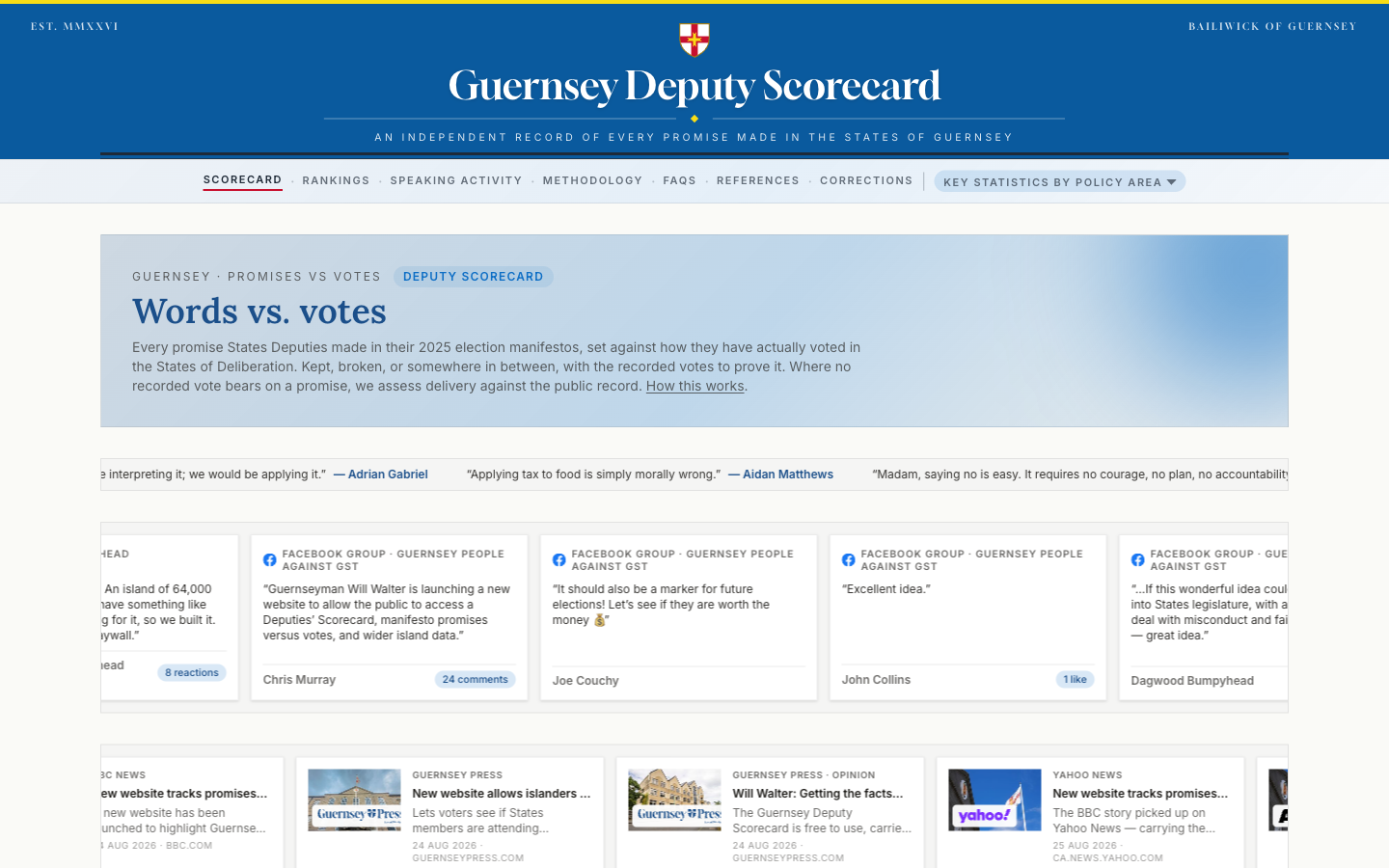
If you'd like help getting a story on air, our corporate communications team runs broadcast sell-ins alongside print, most recently taking the Deputy Scorecard onto BBC Radio Guernsey's breakfast show and across the Channel Islands on Tindle Radio.
Sources and method
- How to write a press release, Shout! Communications (March 2023). Source
- TV media relations, Shout! Communications (2026). Source
- Radio public relations and radio days, Shout! Communications (2026). Source
- Broadcast PR in 2026, with BBC correspondent Peter Bowes, Shout! Communications (2026). Source
- Peter Cardwell on pitching broadcast media in 2026, Shout! Communications (2026). Source
- The difference between print and broadcast PR, ON Broadcast. Source
- How to run a radio PR campaign, Definition. Source
- I interviewed a TV producer on what it takes to unlock broadcast, Presskit. Source
- How to pitch different media outlets, Cision. Source
- Why busy journalists need your b-roll, Jersey Road. Source
- News writing for television and radio, University of Florida IFAS Extension. Source
- The broadcast evolution: the UK's new media landscape, PRmoment (May 2019). Source
- Children and teachers killed as schools and kindergartens attacked in Idlib, UNICEF UK (February 2020). Source
- RNLI research with Bangor University reveals gaps in tidal knowledge, RNLI (9 April 2025). Source
Related questions
What is the difference between a print press release and a broadcast press release?
A print press release is written to be run as copy, with the facts in descending order so it can be cut from the bottom. A broadcast press release is a sell-in for TV and radio: three to five top lines, a bookable spokesperson with title and availability, soundbite-length quotes, and pictures and sound the newsroom can use.
What is b-roll and how long should it be?
B-roll is unedited supporting footage a newsroom can cut into its own package, such as general views, a product or place, or the spokesperson at work, with no graphics or music. UK broadcast agencies recommend five to eight minutes, shot wide and landscape, each shot held for seven to ten seconds, delivered as one high-resolution file on a cloud link.
Do radio interviews need video?
Increasingly, yes. UK radio stations now put interviews out on YouTube, apps and smart TVs as well as on air, so producers expect a spokesperson to be happy to appear on vision, usually over FaceTime for BBC stations or Zoom for commercial stations.
What time should a press release embargo be for broadcast?
00:01 on the launch day. An embargo pegs the story to a specific day, so producers know it is new and can schedule it into that day's bulletins and programmes.
How far in advance should you pitch a story to a TV planning desk?
Seven to eight working days for a planned story, according to broadcast PR agency Shout! Communications, so it can go on the planning list. Reactive comment on breaking news is the exception and needs a reply within the hour.