Guernsey · Speaking Activity
Who spoke the most
Every tracked deputy, ranked by total words spoken in the States Chamber — sourced from the official Hansard transcript, not the voting record. Ranked by word count rather than number of speaking turns, so being interrupted often doesn’t outrank giving fewer, longer speeches. Covers 25 sittings published between 16 July 2025 and 17 July 2026.
Now monitoring
Who spoke the most
What’s dominated the chamber’s time, sourced from the official Hansard transcript.
- 1
 Lindsay de SausmarezPresident, Policy & Resources Committee291 turns · 25 sittings79,325
 - 2
 John GollopVice-President, Committee for Home Affairs231 turns · 25 sittings73,023
 - 3
 Gavin St PierMember, Committee for Employment & Social Security204 turns · 23 sittings60,447
 - 4
 Sasha Kazantseva-MillerPresident, Committee for Economic Development175 turns · 22 sittings43,930
 - 5
 Andy SloanPresident, Scrutiny Management Committee163 turns · 20 sittings37,662
 - 6
 Haley CampMember, Scrutiny Management Committee130 turns · 22 sittings36,756
 - 7
 Jayne OzanneVice-President, Committee for Employment & Social Security152 turns · 22 sittings33,759
 - 8
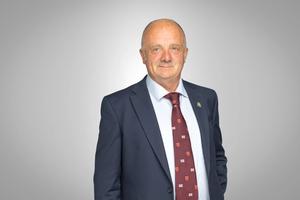 Neil InderPresident, Development & Planning Authority186 turns · 20 sittings33,600
 - 9
 Tina BuryPresident, Committee for Employment & Social Security100 turns · 23 sittings33,158
 - 10
 Marc LeadbeaterPresident, Committee for Home Affairs142 turns · 22 sittings31,283
 - 11
 Paul MontaguePresident, Committee for Education, Sport & Culture76 turns · 16 sittings31,245
 - 12
 Sarah Hansmann RouxelMember, Committee for Education, Sport & Culture106 turns · 22 sittings27,963
 - 13
 Aidan MatthewsVice-President, Committee for Health & Social Care73 turns · 22 sittings24,211
 - 14
 George OswaldPresident, Committee for Health & Social Care141 turns · 20 sittings24,037
 - 15
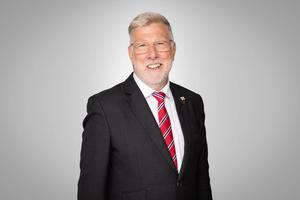 Adrian GabrielPresident, Committee for the Environment & Infrastructure155 turns · 19 sittings23,959
 - 16
 Mark HelyarPresident, States' Trading & Supervisory Board82 turns · 19 sittings23,822
 - 17
 Chris BlinMember, Transport Licensing Authority66 turns · 20 sittings22,428
 - 18
 Rob CurgenvenMember, Committee for Education, Sport & Culture98 turns · 20 sittings22,025
 - 19
 Simon VermeulenMember, Committee for Home Affairs142 turns · 19 sittings21,689
 - 20
 David Goy136 turns · 17 sittings20,339
 - 21
 Garry CollinsMember, Committee for Housing83 turns · 19 sittings19,613
 - 22
 Yvonne BurfordVice-President, Policy & Resources Committee69 turns · 18 sittings18,271
 - 23
 Steve WilliamsPresident, Committee for Housing60 turns · 11 sittings16,648
 - 24
 Charles ParkinsonMember, Policy & Resources Committee48 turns · 12 sittings15,988
 - 25
 Jennifer StrachanMember, Committee for Health & Social Care26 turns · 14 sittings12,339
 - 26
 Andrew NilesMember, Policy & Resources Committee74 turns · 21 sittings12,314
 - 27
 Tom RylattMember, Committee for Employment & Social Security23 turns · 15 sittings11,120
 - 28
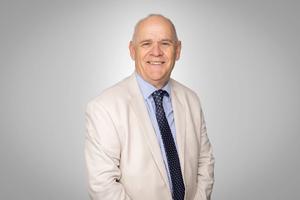 Marc LaineVice-President, Committee for Economic Development28 turns · 11 sittings10,616
 - 29
 Sally RochesterVice-President, Committee for the Environment & Infrastructure34 turns · 18 sittings9,513
 - 30
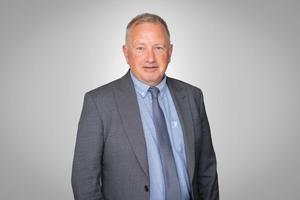 Liam McKennaVice-President, Scrutiny Management Committee42 turns · 11 sittings8,424
 - 31
 David DorrityMember, Committee for Housing31 turns · 12 sittings8,353
 - 32
 Rhona HumphreysMember, Committee for Economic Development21 turns · 14 sittings6,995
 - 33
 Lee Van KatwykMember, Committee for Economic Development43 turns · 12 sittings4,685
 - 34
 Steve FallaMember, Policy & Resources Committee27 turns · 13 sittings4,318
 - 35
 Andy CameronVice-President, Committee for Education, Sport & Culture33 turns · 15 sittings3,867
 - 36
 Munazza MalikMember, Committee for Health & Social Care6 turns · 2 sittings1,578
 - 37
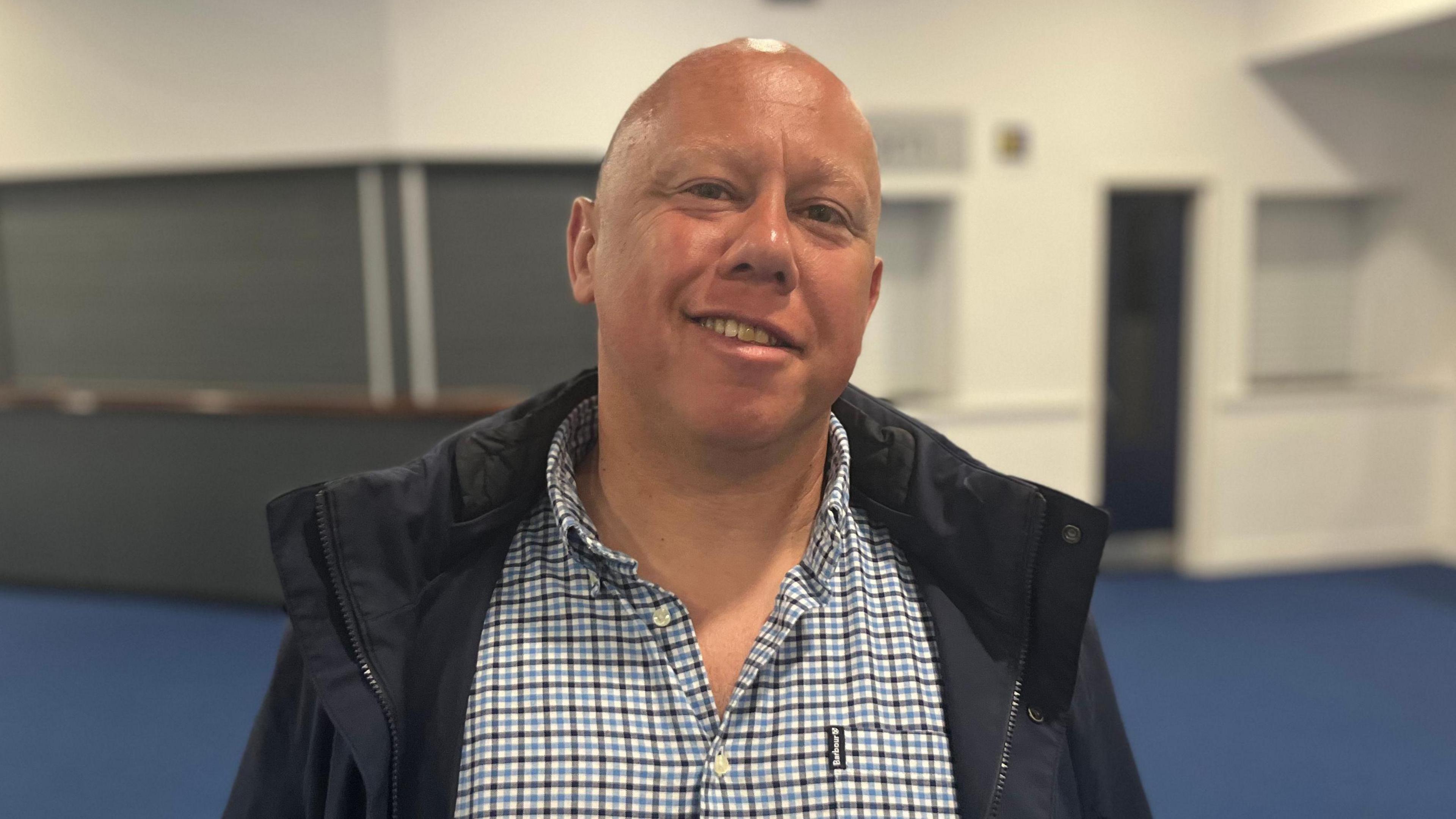 Ross Le BrunMember, Committee for Employment & Social Security13 turns · 5 sittings1,258
 - 38
 Bruno Kay-MouatMember, Committee for the Environment & Infrastructure6 turns · 4 sittings325
Words per sitting over time
Hansard · per sittingHow the ranking works
Ranked by total words spoken, not number of speaking turns, so a deputy interrupted often (many short turns) doesn’t outrank one giving fewer, longer speeches. This measures chamber airtime only — it says nothing about whether a deputy delivered on their promises. See promise delivery rankings.
Debate analysis
A full read of the busiest debates this term — what was argued, by whom, and verbatim lines from the chamber floor — checked against the transcript, never paraphrased. Expand a debate below to read it.
The busiest single agenda item so far has been “Tax Reform 2026 – Debate continued” on 15 Jul 2026, which drew 28,946 words from 27 deputies — 1.1× the next busiest, “Government Work Plan 2026-2029 – Debate continued” (29 Jan 2026). Debates with a full analysis can be expanded below.
- 1
Tax Reform 2026 – Debate continued
28,946w
15 Jul 2026 · 27 deputies
This portion of the Tax Reform 2026 debate covered three separate procedural contests — a sursis (motion to suspend the debate), a referendum amendment, and an outright amendment to prohibit GST — as well as substantial substantive argument about the merits of the broader tax reform package. Each motion attracted distinct lines of argument, though the same core disagreement ran throughout: whether the Assembly should proceed with Policy & Resources' integrated tax package, which included a new goods and services tax at 3%, revised income tax rates, and changes to social security allowances.
The sursis, moved by Deputy McKenna and seconded by Deputy Helyar, asked the Assembly to pause the debate pending the appointment of a new Chief Resources Officer and evidence that the Revenue Service had resolved its operational difficulties. Its supporters drew heavily on concerns about the state of Guernsey's tax administration. Deputy Collins, a former finance lead for the Employment & Social Security Committee, argued at length that the Revenue Service was in a critical condition, managing roughly 400 live IT projects, running 20,000 cases behind in its backlog, and incapable of simultaneously delivering a new GST system, a revised income tax structure, and a new social security allowance. He also challenged whether a genuine funding gap existed, contending that a housing crisis rather than a tax deficit was the Island's central problem, and that building homes would generate the revenues needed. Deputy Blin framed the sursis as an opportunity to build public confidence before an irreversible decision: he wanted demonstration of genuine efficiencies, clarity on Pillar Two revenues, and evidence that economic growth opportunities such as offshore wind had been properly assessed. Deputy Camp questioned whether the £50 million revenue requirement had ever been rigorously established, observing that the package was being proposed before the Government had determined what size and shape of public service it actually required. Deputy Sloan focused on analytical credibility, questioning the presentation of the data in the policy letter over a long enough time series and suggesting that the case for structural deficit had been asserted rather than evidenced; he also noted the asymmetry between twenty years of policy development and the five weeks the Assembly had been given to scrutinise the proposals.
Opposing the sursis, Deputy de Sausmarez, responding for Policy and Resources, argued that projections are inherently variable and that waiting for certainty is futile because the future cannot produce facts. She traced the structural challenge through more than a decade of independent reports — actuarial reviews, Fiscal Policy Panel assessments, the Partnership of Purpose report — and contended that the general direction of the problem was not seriously in dispute even if the precise number was. She also warned that delay could damage Guernsey's credit rating with Standard & Poor's, with material consequences for planned borrowing on housing and the second interconnector. Deputy Inder and others reinforced the credit rating argument in exchanges with Deputy Collins. The sursis was defeated by 22 votes to 17.
Amendment 3, also from Deputy McKenna and Deputy Vermeulen, proposed directing the States Assembly and Constitution Committee to hold a binary public referendum — 'Do you support the introduction of a GST: Yes or No?' — by October 2026. Its supporters argued that the question had divided the Island for twenty years, that several elected Deputies had positioned themselves as anti-GST during the 2025 election, and that the magnitude of a new permanent universal tax justified direct popular consent. Deputy Curgenven made the most sustained constitutional argument: that creating an entirely new tax base was a constitutional-scale act drawing its legitimacy from the people rather than a Chamber majority, distinct from routine budget adjustments. Deputy Goy argued that any vote for GST by Deputies who had campaigned against it was a breach of democratic mandate requiring the people's explicit permission. Deputy Ozanne supported the referendum as a way to restore public trust, noting that referendums have been used internationally for deadlocked binary decisions. Against it, Deputy Hansmann Rouxel, as President of the States Assembly and Constitution Committee, said the cost estimate of £55,000 was entirely unrealistic, that the 2018 referendum had required bespoke legislation and cost around £150,000 eight years ago, and that a binary yes/no question was the wrong instrument for a complex multi-part package. Deputy Inder argued forcefully that taxation is a policy choice, not a constitutional matter, and that outsourcing such decisions to referendums diminished the elected Assembly. Deputies Leadbeater, Dorrity, Gabriel and Humphreys echoed the abdication-of-responsibility argument. The amendment was defeated 25 to 14 after a preliminary procedural motion to curtail debate on it narrowly failed 19 to 18.
Amendment 2, again from Deputy McKenna and Deputy Vermeulen, proposed simply that GST should not be introduced and that all preparations for it should cease. Deputy McKenna argued the concern was principally that any rate, once established, would inevitably rise as experience in Jersey demonstrated. Deputy Vermeulen cited the administrative burden of GST administration — pointing to Jersey's use of 100 staff versus Guernsey's projected 16 — as well as the impact on small businesses already struggling with secondary pensions, TRP increases and other obligations. Deputy Goy challenged the Government's projected 1.9% inflation figure as wildly optimistic given cascading implementation costs, and questioned the ISE fee model. Deputy Curgenven argued the tax was regressive by design, citing OECD findings that consumption taxes measured against disposable income were regressive in every country studied, and that the Government's own GST calculator had been shown in the days before the debate to contradict the policy letter by several hundred pounds per household. Against the amendment, Deputies Bury, Dorrity and Sloan argued that an outright prohibition pre-empted consideration of the package as a whole, and that consumption taxes are theoretically broad-based and used by progressive jurisdictions across the world. Deputy Inder suggested that if GST passed but implementation proved undeliverable, a future requête remained available. The record shows a division was held on Amendment 2, with the result showing it was not carried: pour 14, contre 25.
Throughout the afternoon the real disagreement lay not only on the merits of GST itself but on whether the Assembly had sufficient evidence of the revenue need, adequate assurance about administrative delivery, and genuine public consent to proceed with a permanent structural change on the timetable proposed.
“After 20 years of development, taking a little longer than five weeks is not procrastination. It is the minimum standard of responsible Government.”
“GST is not a constitutional issue; it is a policy choice. The clue is in the name. You are politicians. These are policy choices.”
“The creation of a new, permanent universal tax base is a constitutional scale act, and constitutional scale acts draw their legitimacy from the people or they do not truly have it.”
- 2
Government Work Plan 2026-2029 – Debate continued
27,435w
29 Jan 2026 · 24 deputies
The afternoon session of this States of Guernsey debate covered three amendments to the Government Work Plan 2026-2029. The sitting resumed after a lunch adjournment, and three separate votes were taken, each on a distinct proposition: Amendment 4, which sought to require publication of key performance indicators (KPIs) and progress metrics against the Work Plan in a single publicly accessible place; Amendment 7, which directed the Policy & Resources Committee to target a 1% real-terms annual reduction in baseline public expenditure over 2027-2029; and Amendment 6, which directed P&R to establish a zero-based budgeting programme for material areas of States expenditure.
Amendment 4, proposed by Deputy Goy and seconded by Deputy Curgenven, was the most contested debate of the session. Deputy Goy argued that any serious government work plan must contain measurable KPIs, pointing out that the current document resembled what he called a government wish list rather than a plan with defined targets. He referenced comparable plans from other jurisdictions, including Singapore, to argue that the absence of KPIs was anomalous. He also contended that modern tools such as AI and existing government data systems made compilation of such metrics straightforward and inexpensive. Supporting voices came from Deputy Inder, who accused P&R of having been captured by civil service culture and called for accountability to the public as the real shareholders of government spending, and earlier contributions from Deputies Vermeulen, Camp, Matthews, and Sloan were referenced approvingly by Goy. Deputy Inder also argued that the amendment aligned with commitments to transparency made by the President of P&R, Deputy de Sausmarez, at the start of the term.
Opposing the amendment were a cluster of Committee presidents and members. Deputy Helyar, while sympathetic in principle and citing the data.gg website as evidence that data could be made accessible, said he doubted practical compliance was achievable and indicated he would vote against. Deputy Montague raised concerns that dashboards become cosmetic without real substance behind them and that policy development workstreams resist the kind of clear metrics suited to project management. Deputy Strachan warned that HSC officers already lacked bandwidth and that the amendment would add bureaucratic burden. Deputy de Sausmarez offered the most detailed critique from P&R, distinguishing sharply between policy development and project delivery, arguing that the vast majority of the Work Plan consisted of the former, where progress metrics would be misleading or uninformative. She offered instead to bring forward a proposition targeting reporting on the major projects portfolio, which she described as where tens of millions of pounds go astray. Deputy Goy intervened during her speech to clarify that KPIs could be high-level rather than granular, but Deputy de Sausmarez maintained the amendment as written was unworkable against the GWP specifically. The recorded vote found 12 in favour and 23 against, and the Bailiff declared the amendment lost.
Amendment 7, proposed by Deputy Humphreys and seconded by Deputy Rylatt, drew a wide-ranging debate about fiscal discipline. Deputy Humphreys framed the target as a signal of intent rather than a blunt cut, invoking the British Cycling marginal gains philosophy and emphasising that frontline services should not bear disproportionate burden. Several Committee presidents expressed scepticism about deliverability: Deputies Bury, Strachan, Leadbeater, and Montague all noted that their largest budget lines were predominantly formula-driven staff costs or demand-led services such as health and social care that were structurally growing. Deputy Laine enumerated a series of major IT investment commitments ahead that would consume budget headroom, arguing the amendment was made without a three-to-five year financial horizon. Deputy Sloan was the most sceptical, calling the amendment largely meaningless on the grounds that the baseline measure used allowed spending to rise materially while still claiming the target was met; he abstained. Deputy Kazantseva-Miller provided arithmetic to illustrate that 1% real-terms savings on the 2026 budget translated to roughly £7.7 million, urging Members to understand what they were committing to. Deputy Goy opposed the amendment as lacking nuance and predicted cuts would fall on the lowest-level services rather than senior management. Despite widespread caveats, 29 Members voted in favour, 5 against, and 3 abstained; the Bailiff declared the amendment carried.
Amendment 6, proposed by Deputy Camp and seconded by Deputy Curgenven, called for zero-based budgeting to be established across material areas of States expenditure, with findings reported no later than the mid-term Work Plan report. Deputy Camp drew a conceptual distinction between zero-based budgeting, which he said required every spending line to be justified from scratch, and priority-based budgeting, which P&R had proposed, arguing the former was necessary to reset an opaque spending culture before reallocation could be meaningful. Deputy Helyar supported it but cautioned that a large share of public expenditure was formula-led and could not realistically be zero-based. Deputy Rochester welcomed it as a discipline for Committees' financial scrutiny. Deputy Curgenven, as an accountant, noted the approach had been used by governments since the 1970s and that the States already applied elements of it in practice. Deputy de Sausmarez expressed strong support, noting P&R had already intended to pilot the approach in a few areas including corporate services and HSC. The vote was unanimous in practical terms: 35 in favour, none against, and the Bailiff declared it carried.
“A lot of word salad is not the same as having hard numbers, KPIs, that the public can measure and track the progress. I have read numerous Government Work Plans from different countries including Singapore. I have not seen a single work plan that does not have KPIs.”
“That lack of communication does not help. I appreciate the need for reporting. We definitely need to have KPIs. We must get on with what we need to do in the work plan, but I just do not think it is possible to comply.”
“The only savings that matter are cashable savings, money that is no longer being spent. As a former public policy economist, I can say with some confidence that these are extraordinarily difficult to achieve without doing things all together, or hiring less people, adding less people.”
“Zero-based budgeting simply removes the automatic assumption that spending is justified simply because it existed last year. Each budget cycle starts from zero and every area of spend must be actively justified.”
- 3
2. Appeals Commissioner Report on a complaint under the Code of Conduct – Debate continued
26,692w
27 Nov 2025 · 19 deputies
This debate concerned a Proposition brought by the States' Assembly and Constitution Committee (SACC) to suspend Deputy St Pier for 25 days without pay, following findings by a Commissioner for Standards and an Appeals Commissioner that he had breached the Code of Conduct. The specific findings were that Deputy St Pier had confirmed details of informal, unsubstantiated complaints to a Guardian journalist in an unsolicited phone call, that this confirmation was misleading due to its inaccurate and unsubstantiated nature, and that his conduct, taken alongside a previous reprimand, amounted to bullying. The stakes were significant: the outcome would set a precedent for how the Assembly handles Code of Conduct sanctions, and the debate touched on broader questions about the independence of complaints processes, the rights of elected representatives to engage with the press, and the adequacy of healthcare complaints systems.
Those supporting the Proposition argued that the Assembly's proper role at this stage was not to retry the case but to act as a sentencing body, accepting findings already confirmed on appeal. Deputy Sloan made the case that the real question was whether Members could make serious public claims without accuracy or accountability, and that the Appeals Commissioner's judgment, as the highest level of independent scrutiny available, deserved respect. He argued that continuing to cast doubt on the process was insinuation without evidence, and that the framing of complaints as formal when they were informal carried misleading implications. Deputy Helyar, drawing on his legal background, described the Assembly's role as analogous to a governing council deciding what sanction was necessary to uphold institutional integrity, and stated he could find no fault in the application of the process. Deputy Niles similarly argued that undermining an independent Commissioner would create a culture where rules applied selectively, and that in any other professional setting a strict sanction would have been applied without debate.
A larger group of deputies argued against accepting the Proposition, though their reasoning varied considerably. Deputy Bury, who had served as Vice-President of HSC, contended that the foundations of the Commissioner's conclusions were unstable because the complaints data relied upon came from a system she regarded as not fit for purpose, and she was critical of the investigative process for failing to interview key witnesses. Deputies Matthews and Rochester each analysed the four findings of fact and concluded they were either misstated or did not support the inferences drawn from them, including the attribution of intent. Deputy Rylatt focused on two specific concerns: first, that the ordinary meaning of the word 'complaint' did not require clarification of its formal or informal status, especially given public reporting already in the domain; and second, that neither the Commissioner nor the Appeals Commissioner had provided adequate reasoning for why 25 or 30 days was the appropriate sanction, leaving no transparent methodology for the Assembly to evaluate. Deputies Burford, de Sausmarez, Gabriel, Humphreys, and Blin each raised concerns about proportionality and the chilling effect a suspension could have on deputies' ability to represent constituents and engage with the media. Deputy de Sausmarez drew a distinction between actively disclosing information and confirming facts already held by a journalist, arguing the two were materially different. Deputy Gabriel challenged the Code itself as insufficiently clear and criticised the Assembly's tendency to address symptoms rather than causes.
Deputy St Pier, as the subject of the Proposition and speaking at length under a rule permitting him no time limit, addressed both procedural objections and the broader context. He described the complaint as the fifth in a series, set out the background of his family's own experience and subsequent engagement with other families, and argued that the Commissioner had failed to investigate key evidence, including information from the MSG that he was not the Guardian's original source. He contended the sanction was disproportionate for what amounted to confirming facts in a 90-second unsolicited call, and called for an independent review of HSC complaints and governance systems rather than his suspension. He framed the core issue as a pernicious institutional culture resistant to criticism, rather than the conduct of any individual.
The real disagreement lay on two axes: whether the Assembly should treat the Commissioner's findings as settled facts requiring only a sentencing judgement, or whether Members were entitled to scrutinise the reasoning and proportionality of those findings; and whether confirming unsubstantiated complaints to a journalist constituted the kind of misconduct that warranted a suspension of this severity. The transcript does not record the outcome of any vote on the Proposition.
“The real issue today is simpler, starker and far more serious. Can Members of this Assembly make serious claims about individuals or institutions without governance, without accuracy and without accountability. That is the question that runs through this entire debate.”
“I share this story because it illustrates how I understand the difference between actively disclosing information and confirming facts that are already known. A distinction that is essential to the question we are conspiring today.”
- 4
1. The States of Guernsey Annual Budget for 2026 – Debate commenced
26,487w
4 Nov 2025 · 25 deputies
The first amendment to the 2026 Annual Budget of the States of Guernsey proposed replacing the approved Committee Net Expenditure figure of £678 million with a lower figure of approximately £650.5 million, effectively holding most Committee spending at 2025 levels and saving around £27 million. The amendment was brought jointly by Deputy Sloan and Deputy Camp, with Deputy Sloan opening the argument that the Budget as proposed reflected fiscal drift rather than discipline: he cited a projected cash deficit of £115 million, expenditure growth of 4.4% against revenue growth of 3.4%, and pay costs forecast to rise by nearly 7%. He framed the amendment as a necessary corrective and a matter of political will, distinguishing between formula-led Social Security spending and Education Sport and Culture budgets (both left untouched) and the remaining Committee budgets targeted for restraint.
The amendment attracted a wide and fractious debate. Those supporting it included Deputies Camp, Inder, Niles, Helyar, Vermeulen, Blin, and Curgenven. Deputy Camp argued that Government had a spending discipline problem rather than a revenue problem, that the £4 million consultancy saving already embedded in the Budget was really an admission of waste, and that restraint needed to precede any honest case for new taxes. Deputy Helyar, drawing on experience from previous Budget rounds, said the States Assembly had effectively lost control of expenditure to the public service and that the amendment was a necessary signal. Deputy Inder challenged the growth figures across individual Committee budgets since 2018 and said he would support the amendment because its bluntness was at least honest. Deputy Niles declared he could not wait another year before acting, describing the reserves as savings built by Guernsey people and being depleted through fiscal recklessness.
Opposition to the amendment was equally forceful and came primarily from Committee Presidents and from several Forward Guernsey deputies who said they shared the spirit of the proposal but rejected its execution. Deputy Rylatt, in a maiden speech, accepted the severity of the fiscal position but described the amendment as a blunt instrument with no differentiation between efficient and wasteful spending, and argued that the Chief Executive's new ground-up savings programme represented a more credible path. Deputy Oswald set out in detail what an £8.6 million reduction in the Health and Social Care budget would mean in practice: closure of De Havilland Ward, cessation of an orthopaedic initiative, reduction in key worker accommodation, and reversal of investment across several specialities. Deputy Gabriel warned that the amendment would drive over £1 million through E&I's cash limit, affecting contracted maintenance costs that had risen 7–12% above inflation, and argued that deferred infrastructure maintenance always cost more later. Deputy Rochester described the amendment as a short-term damaging solution to a long-term structural problem and said that without proper cost analysis it would force service reduction rather than efficiency. Deputies Hansmann Rouxel, Leadbeater, Ozanne, Bury, Matthews, Strachan, and Humphreys all rejected the amendment on similar grounds: absence of consultation with affected Committees, no detail on what specifically would be cut, and the risk that first casualties would be maintenance, training, and prevention rather than genuine waste.
Deputy Parkinson, in a detailed technical response, contested the £115 million cash deficit framing, explaining that approximately £109 million of that figure comprised Pillar Two receipts not yet received and capital expenditure to be funded by borrowing, and argued that the real revenue balance was much closer to equilibrium. Deputy St Pier, summing up for Policy and Resources, acknowledged calls for budget reform and accepted Deputy Rochester's offer to assist with that process, but argued the amendment was performative, that £4.4 million in pay awards already contracted for 2026 meant the effective saving required would exceed £31 million once redundancy costs were included, and that there was no budget reserve mechanism through which Committees could seek relief. He also noted that the real-terms increase in spending under the proposed Budget was 0.4%, below the ten-year historical average of 1%.
Deputy Sloan's reply defended the £115 million figure, cited his own 2012 report on demographic pressures in health spending, and challenged the three Forward Guernsey deputies present to honour what he read verbatim as a manifesto commitment to an annual 1% reduction in baseline spending saving £25 million each year by 2029. The amendment was put to a recorded vote and defeated, with 13 voting in favour, 25 against, and 1 not voting.
“It is not austerity. It is realism. A pause to take stock, to demonstrate that this Assembly still believes in living within its means.”
“This reduction in spending is a wholly blunt instrument. Secondly, it is not guided, I do not think, by a clear idea of what fiscal responsibility means in this budgetary context.”
“Before we pass the hat around the Island, let us check our own pockets first. The amendment asks for two simple things. That Committees strive to live within existing budgets, only seeking additional funding from P&R where a genuine and evidence need exists. That this Assembly sends a clear signal to the public that leadership begins with restraint.”
“There is a lot of gesture politics going on, I suggest, in this debate. This is really not the time to be making extravagant claims about Government, the size of Government and our tax policies.”
- 5
Tax Reform – Workstream 1 – Propositions carried
25,595w
26 Feb 2026 · 25 deputies
This debate covered two distinct but connected policy questions before the States of Guernsey: first, an amendment (Amendment 2) proposed by Deputy Camp and seconded by Deputy Helyar to remove territorial corporate taxation from the Tax Review Sub-Committee's workstream; and second, the general debate on Propositions 1 through 4 of the Tax Reform Workstream 1 policy, centring chiefly on whether a proposed Goods and Services Tax should apply to food at a standard 5% rate or exempt food and levy 6% on everything else, along with related questions about rate-change safeguards and linkage of GST to income mitigation measures.
On the territorial tax amendment, Deputy Camp argued that the very act of considering territorial tax was actively harming Guernsey's finance industry, causing business flight and uncertainty, and that continuing the process simply to honour a democratic mandate was insufficient justification given the known economic damage. Deputy Helyar supported this position, characterising the OECD's involvement as the advice of an institution fundamentally hostile to offshore finance, and warning that tinkering with Guernsey's stable, low-tax system would drive business away rather than merely deter new arrivals. Deputy Dorrity added a specific risk: that introducing a territorial regime could trigger grey-listing by international regulatory bodies, potentially undoing years and significant expenditure devoted to Moneyval preparation, all for an uncertain fiscal return the Sub-Committee's own analysis placed between a loss of £5.1 million and a gain of £18.4 million annually. Against these arguments, Deputy St Pier, speaking for Policy and Resources, acknowledged industry anxiety but argued that the review was on schedule to report after Easter and that cutting the process short before its conclusions were known would be a breach of trust. Deputy Kazantseva-Miller, while expressing personal scepticism about territorial tax, argued that Deputy Parkinson had a clear democratic mandate and that premature amendments were themselves fuelling the media coverage and business uncertainty they sought to prevent. Deputy Blin agreed that removing an option mid-review would change the nature of the review itself and damage confidence in political stability. Amendment 2 was put to a recorded vote and defeated, 13 pour to 23 contre, with 1 abstention.
The debate then moved to the main propositions. The central contested question was whether GST should be levied on food. Deputy Matthews made the principled case that taxing food is morally wrong, citing many jurisdictions globally that exempt essential foodstuffs, and argued that operational complexity should not override policy principle. Deputy Ozanne reinforced this, warning that the essential-cost-relief basket of goods may not reflect the actual purchasing patterns of low-income households and raising concerns about migrant and seasonal workers who would have no access to relief measures. Alderney Representatives Hill and Snowdon flagged the particular hardship for Alderney, where food prices are already among the highest in Europe and a 25% poverty rate has been recorded. On the other side, Deputy Dorrity and Deputy Leadbeater made detailed practical arguments: Leadbeater explained that the Guernsey Customs and Immigration Service lacks the capacity and the IT infrastructure to handle line-by-line food exemptions, noting that even Jersey, with greater resources, experienced significant implementation strain without such exemptions. Deputy Niles, Deputy Dorrity, and eventually Deputy Bury all concluded that the principle of protecting lower-income households was better served by a broad 5% rate with income-tax and social-security mitigations than by a 6% rate with food exempted, because the wealthiest consumers benefit most from food exemptions in absolute terms. Deputy de Sausmarez, as President of Policy and Resources, reinforced this counterintuitive analysis, adding that retail pricing in practice does not mechanically pass on tax exemptions to consumers. Deputy Sloan dissented from both sides in a notable speech: he supported consumption taxes in principle but objected to the redistributive 'plus' elements of the package, arguing it was logically perverse to raise a tax while making 60% of the population better off, and that the package disproportionately burdens families. Deputy Camp and Deputy Kazantseva-Miller each raised concerns about Proposition 3, which proposed examining a two-thirds supermajority requirement to raise the GST rate, warning it set a dangerous and unworkable constitutional precedent. Deputy Helyar, now at the Trading and Business Services Board, raised a separate concern about Proposition 1(f) and the bureaucratic burden created when STSB entities raise charges that then flow to general revenue and must be reclaimed through lengthy business-case processes. All four substantive propositions were ultimately carried by the Assembly, with Proposition 1(b) — applying GST to food at the standard rate — passing 24 to 12, and Propositions 1(a), 1(d-f), 2, 3, and 4 each carried by larger margins.
“An appeaser is someone who feeds a crocodile hoping he will be eaten last. That would very much apply, in my view, and certainly I would think so across the finance sector quite broadly to the OECD.”
“Even if Guernsey was ultimately cleared, after a process that can take several cycles, each lasting six to 12 months or more, depending on how quickly reforms are adopted and compliance clarified, even if Guernsey was ultimately cleared upon completion of the review process, the damage during that period of uncertainty would most certainly have already been done.”
“I cannot vote for this Proposition. I cannot vote for the GST package. I will have to go through it. I will vote for the one amendment against food because if it comes to it, I cannot live with anything on food. Otherwise, I will be voting against the rest of the Propositions.”
- 6
4. Government Work Plan 2026-2029 – Debate continued
25,424w
29 Jan 2026 · 25 deputies
This debate covered two distinct amendments to the Government Work Plan 2026–2029. Amendment 8, proposed by Deputy Rylatt and seconded by Deputy Humphreys, sought to direct the Policy and Resources Committee to explore options for the strategic co-ordination and governance of artificial intelligence across the Bailiwick, building on an existing workstream already in the Work Plan entitled 'AI Strategy – Understanding Island Impact', and to bring recommendations back to the Assembly by December 2026. Amendment 4, proposed by Deputy Goy and seconded by Deputy Curgenven, sought to require P&R to publish Government Work Plan progress in a publicly accessible format by July 2026 and update it at least every six months, including clear targets, leading indicators, milestones, and qualitative and quantitative metrics.
On Amendment 8, the central question was whether AI required distinct strategic treatment separate from the existing digital governance framework, or whether sufficient work was already under way through bodies such as the Digital Steering Group and Innovate Guernsey. Deputy Rylatt opened by framing the amendment as a plan for a plan: not a mandate for a new office or new spending, but a time-limited direction to P&R to examine governance options and report back. Deputy Humphreys, who seconded the amendment, argued it was deliberately flexible – the outcome could be a working group, an expanded existing structure, or a third-party body – and that the technology was already arriving faster than current forums acknowledged. Deputy Kazantseva-Miller made the most sustained case against, arguing that digital and AI were inseparable, that a cross-Government Digital Steering Group was already doing precisely this co-ordination work, and that directing the work to P&R risked creating additional centralisation and bureaucracy. She cited the Isle of Man's AI office as costing taxpayers £1 million and warned against replicating that model. Deputy Strachan broadly shared these concerns about addding unfunded layers of governance but ultimately said she would support the amendment, on the grounds that failing to act risked another report gathering dust. Deputy Ozanne drew a parallel with the creation of the Housing Committee to give political urgency to a priority, arguing the same logic applied here. Deputies Goy and Blin provided detailed technical context on the rapid advance of generative and agentic AI globally, with Deputy Goy noting 75 countries already had national AI strategies. Deputy Helyar argued against, saying the States' IT infrastructure was too unstable to support any strategic AI programme and that spending would be wasted. Deputy Laine supported the amendment with reservations, emphasising that AI adoption was primarily a culture and leadership challenge rather than a technical one, and that he would not back any outcome leading to a costly new office. President Deputy de Sausmarez said P&R did not oppose the amendment and would personally support it, noting its chief practical virtue was that it imposed a deadline. The amendment was carried by recorded vote, 33 in favour and 4 against.
On Amendment 4, the core argument in favour was that government accountability required measurable targets and that without them large spending failures like MyGov were inevitable. Deputy Sloan called it the bare minimum expected of a serious government and cited the precedent of the 2010–2015 States' Strategic Plan which tracked 64 KPIs. Deputy Vermeulen drew on his business experience to argue for regular performance monitoring. Deputies Camp, Matthews, and Curgenven echoed these points, with Deputy Camp expressing shock at suggestions that the States was not mature enough to produce such reporting. The main arguments against came from Deputies Hansmann Rouxel, Oswald, St Pier, Ozanne, Leadbeater, and Rochester. Deputy Hansmann Rouxel offered a detailed historical account of how previous Work Plan reporting cycles had consumed officer capacity without improving delivery, warning that rigid frameworks cause organisations to optimise for reporting rather than results. Deputy Ozanne raised the issue of confidentiality, arguing that publishing live metrics on sensitive workstreams such as healthcare reform could undermine the work itself. Deputy Rochester distinguished between operational delivery, where KPIs were achievable, and the kind of large transformational work that could not yet be meaningfully quantified. Deputy St Pier stated that the States was not yet mature enough as an organisation to make the leap required and noted that dashboards already existed internally. Deputy Gabriel questioned whether this was the right tool to drive culture change at this moment. Deputy Blin said he was genuinely torn, sympathetic to the transparency argument given recent IT spending failures but concerned about the practical burden of implementation as worded. This record does not show how Amendment 4 concluded.
“I cannot overstate the importance of us as a Government getting to grips with this and getting on the front foot.”
“I just think we need to put a wet towel around our heads here and look objectively at what the issue is. AI is going to happen, whatever we do and say in here today.”
“The idea that parts of our administration would have a nervous breakdown at the prospect of some straightforward, periodic reporting really does beggar belief.”
“My concern with this amendment, as well-intentioned as it is, is that it will come in the form of a website or whatever. I do not think that is what is being proposed, but in other ways that will mean that the public will be looking and judging what we are doing without all the facts.”
- 7
1. The States of Guernsey Annual Budget for 2026 – Debate continued
25,061w
5 Nov 2025 · 24 deputies
This continuation of the States of Guernsey Annual Budget debate for 2026 covered three amendments and a wide-ranging general debate on the Island's fiscal direction. Amendment 5, proposed by Deputy Dorrity, asked the Policy and Resources Committee to explore whether Jersey's approach to forecasting potential Pillar Two revenues could be adopted in Guernsey. Amendment 2, proposed by Deputy Sloan, sought to restore a separate, visible budget line for the Scrutiny Management Committee after it had been administratively merged with the States Assembly and Constitution Committee. Amendment 6, brought by Deputy St Pier, directed Policy and Resources and the Committee for Housing to consider changes or alternatives to Mortgage Interest Relief to better assist first-time buyers and those most in need, with recommendations due by the 2027 Budget. General debate then ranged across the overall fiscal position, public spending growth, economic sustainability, housing, overseas aid, investment returns, and the structural pressures on health and education.
On Amendment 5, the central argument for it was that Pillar Two revenues were subject to significant and growing uncertainty. Deputy Kazantseva-Miller argued that planning expenditure on uncertain future accruals was dangerous, pointing to the failure of an earlier 'core package of measures' approved two years previously, and to emerging risks including US tax policy changes under President Trump and the UK Government's moves to develop its own captive insurance industry. Deputy Gollop supported the amendment on the grounds that more information was always preferable and that the 'multiplier effect' of any loss of mobile finance professionals would extend well beyond direct tax receipts. Deputy Helyar considered the amendment uncontentious and noted that the industry showed no immediate signs of departing, but cautioned that the Island would not know who was choosing not to come. Deputy Ozanne declined to support the amendment, arguing that her own enquiries had established that the Treasury could not readily model alternative behavioural assumptions beyond the existing range of £29 million to £44 million, and that a fuller tax review was the more appropriate forum. Deputy de Sausmarez stressed that the Budget was already more cautious than some speakers implied, and that many of the concerns raised were more relevant to the ongoing tax review than to the 2026 Budget specifically. Deputy St Pier confirmed that the tax technical teams were already in continuous dialogue with Jersey counterparts and that whatever the amendment's outcome, Policy and Resources would keep the matter under review. The amendment was carried by 27 votes to 7, with 5 abstentions.
Amendment 2 drew limited controversy in principle but sparked a technical dispute. Deputy Sloan argued that maintaining a distinct budget line for Scrutiny was essential for transparency and the perception of independence, and that no additional spending was sought. Deputy Hansmann Rouxel, as President of SACC, noted she would not oppose the amendment but flagged that the residual SACC allocation of £26,000 was inadequate. Deputy Kazantseva-Miller raised a technical objection, arguing that by deleting the combined parliamentary Committees table and replacing it with Scrutiny figures only, the amendment effectively removed SACC from the Budget document. Deputies Burford and Sloan responded that the overall parliamentary budget figure of £730,000 remained intact in the main propositions and that the SACC residual would be understood by subtraction. Deputy St Pier confirmed Policy and Resources was relaxed about the amendment. It was carried 36 votes to 3.
Amendment 6, in contrast, was almost entirely uncontested. Deputy St Pier framed it as Policy and Resources responding constructively to the previous day's successful Amendment 4 on Mortgage Interest Relief, without reversing that decision. Deputy Gabriel questioned whether a formal proposition was necessary given that committees already had the mandate to do this work, and Deputy Goy echoed that concern, calling it potentially superfluous. Deputy Leadbeater welcomed it as a more targeted alternative to the blunter approach of Amendment 4. Deputy Ozanne supported it enthusiastically, requesting a light-touch working party approach. Deputy St Pier in his reply confirmed the time-limited nature was deliberate to prevent drift, and that he and Deputy de Sausmarez would support the underlying amended Proposition 1 when the substantive vote came. Amendment 6 passed 38 votes to nil.
General debate was characterised by sharp disagreement about whether to support the overall Budget. Deputy van Katwyk, in his maiden speech, called the Budget a continuation of two decades of structural deficit and urged the Assembly to declare a fiscal emergency. Deputy McKenna described the Budget as an attempt to fool part of the population, citing the cost of living, population loss, and rising public spending. Deputy Helyar refused to support aspects of the Budget, arguing the public service had not internalised the fiscal crisis and that politicians lacked the executive tools to drive real change. Deputy Sloan set out arithmetic showing public spending had grown by a factor of 2.2 since 2008 while the economy grew by a factor of 1.9, and described repeated deferrals as collective failure. Deputy Blin, voting against the Budget for the first time in two terms, said the instinct to spend rather than reform persisted. Against this, Deputy Ozanne said voting against the Budget would be fiscally irresponsible and that the Island needed a clear plan. Deputy Niles said he respected P&R's commitments and would not bring instability by opposing the Budget. Deputy Hansmann Rouxel offered a structural analysis of how well-intentioned requêtes had hardwired recurring costs into health and education budgets over many years. Deputy Strachan raised the treatment of investment returns, arguing Guernsey was an outlier in excluding them from structural deficit calculations, and called for a move to medium-term budgeting. The record does not show how the vote on the main Budget propositions concluded.
“I wanted to bring into this another important consideration, which is how, I think, dangerous it is to be making expenditure decisions based on future accruals and expectations when we have not actually received the revenue from those measures.”
“I do not believe that we will get much further than the same response I got, which is it will be a range between £29 million and £44 million. So I will not be supporting this amendment, because I do not think we are in a position to do the work.”
“Sir, that is not continuity. That is the admission of collective failure across more than a decade. This Budget, as I repeated several times yesterday, presents a £115 million cash deficit, a £77 million structural deficit and yet it proposes to add to expenditure again at a rate greater than the Budget before that.”
“A service left with a diffused and weak political direction acts according to its own rhythms. Projects multiply, new and non-essential services, regulations are invented, posts accumulate, costs rise and every year the gap between what we spend and what we can afford grows uncontrollably wider.”
- 8
Tax Reform – Debate Continued
24,544w
16 Jul 2026 · 25 deputies
0
Deputies who've spoken
0%
of 38 tracked deputies
Committee breakdown
- Committee for Employment & Social Security16%
- Policy & Resources Committee15%
- Committee for Home Affairs14%
- Committee for Education, Sport & Culture10%
- Scrutiny Management Committee10%
- Committee for Economic Development8%
- Committee for Health & Social Care7%
- Committee for Housing5%
- Committee for the Environment & Infrastructure4%
- Development & Planning Authority4%
- Other committees8%
In their own words
Verbatim, source-checked lines from the chamber this term - each deputy’s most memorable moment on record.